Top Signs You Need Garage Door Service – Don’t Ignore These
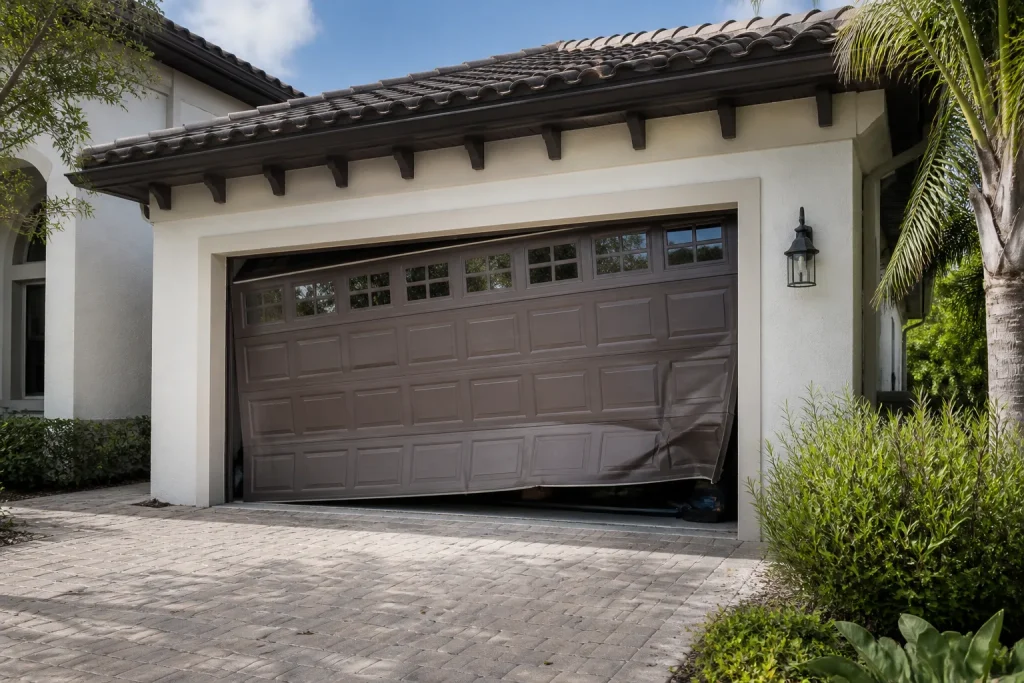
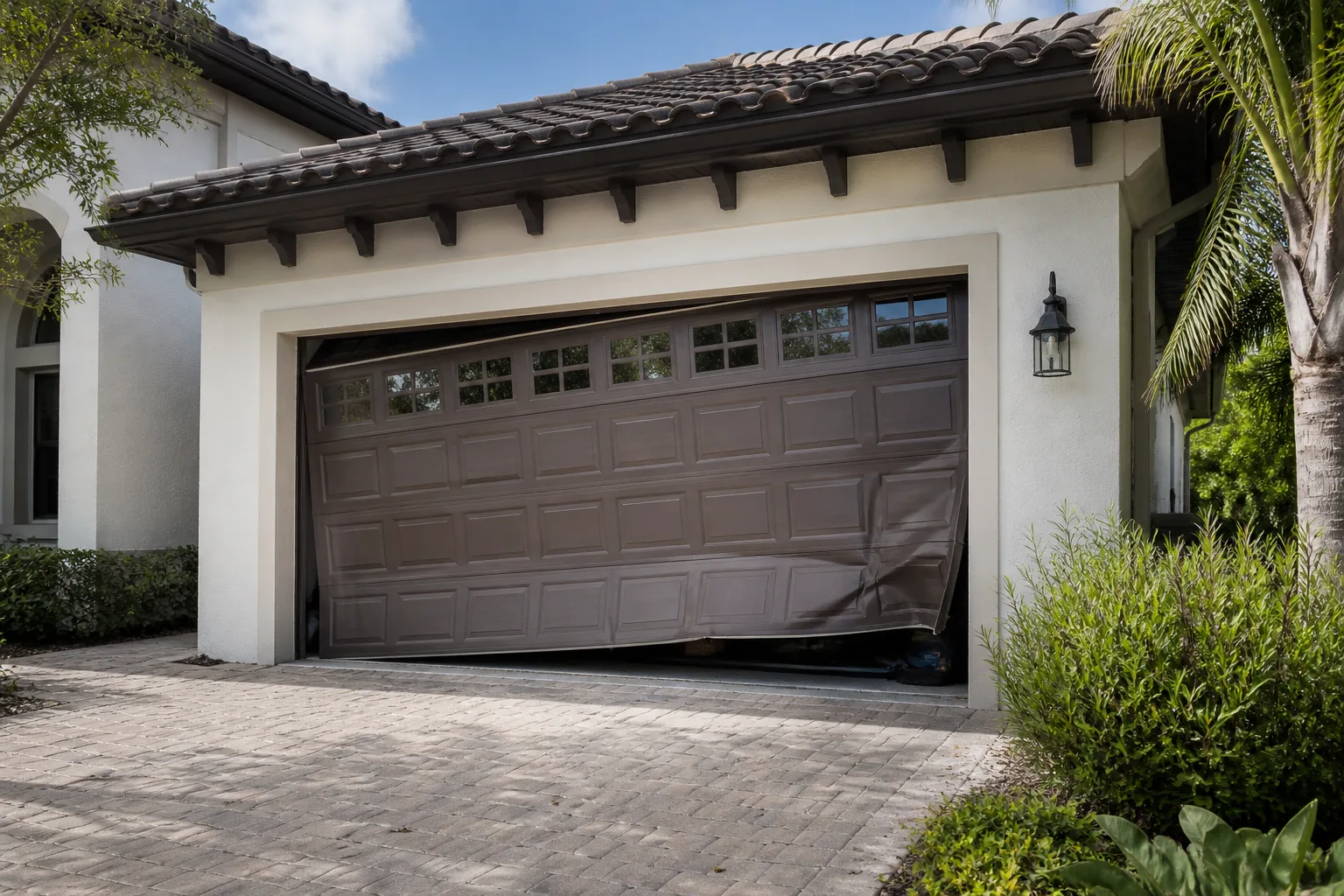
The clearest signs you need garage door service are a door that opens slower than it used to, a grinding or popping sound during travel, uneven gaps along the sides, a door that reverses on its own, or a visible cable hanging loose off its drum. Any one of those means something in the system is working harder than it should. The good news is most failures in Town ‘n’ Country announce themselves weeks ahead of time. If you’d rather not climb a ladder and guess, call (833) 987-0462.
A garage door that takes two seconds longer to open than it did six months ago isn’t aging gracefully. It’s telling you the spring tension is off and the opener motor is quietly making up the difference. That motor costs several times what a spring adjustment does, and it’s the most common way a small problem here turns into an expensive one.
What makes this tricky is that garage doors fail slowly, then all at once. The signals are subtle at first, easy to wave off as the door just being old. So we’ve sorted them by how fast you need to act, from “call today” to “mention it at your next service.”
Key Takeaways
- Balance is the single most telling test you can run yourself, and it takes 30 seconds.
- A door that won’t stay halfway up usually points to a spring losing tension, not a failing opener.
- Specific sounds map to specific parts: springs, rollers, and track bolts each sound different.
- Our summer heat here wears seals and cables faster than most northern guides assume.
- Slow travel is usually a schedule-this-week problem; a snapped spring or loose cable is a call-today problem.
Which Signals Mean “Call Today” vs. “Schedule This Week”?
The fastest way to sort your symptoms is by urgency. A snapped spring, grinding that sounds like metal on metal, or a cable visibly off its drum means call today. A slower-opening door, uneven gaps at the floor, or a new rattle that shows up after a hot spell are usually a schedule-this-week problem. A faint noise change with nothing else wrong can often wait until your next service.
Here’s how we’d tier the three most common situations, based on what we see across Town ‘n’ Country:
- Call today: A loud snap followed by the door not moving, a cable hanging slack or wrapped wrong on the drum, a door stuck open or closed, a grinding that only happens under load, or any sign the door is off its track.
- Schedule this week: The door moves noticeably slower than before, one side sits lower than the other, the motor strains at the start, the opener reverses for no clear reason, or the door doesn’t close all the way.
- Mention at next service: A slightly louder creak, a small rattle at one end, a remote that occasionally needs a second press, or a light that flickers during travel.
The reason to sort by urgency is that some of these are harmless to wait on and some get worse fast. A worn roller can keep squeaking for months without doing real damage. A cable that’s jumped its drum can let the door drop. Those two problems can sound almost the same from inside the house, which is exactly why the diagnostic test below matters.
Why Is the 30-Second Balance Test the Most Useful Check?
The balance test tells you whether your springs or your opener is doing the heavy lifting. With the door closed, pull the release cord to disconnect the opener. Lift the door by hand to about halfway, then let go. A healthy door should sit there, balanced. A door that sags or drops is being held up by the opener motor instead of the springs, and that motor is now doing work it wasn’t built for.
This test matters because most homeowners assume a slow, sluggish door means the opener is dying. Sometimes it is. More often, the springs have simply lost tension as the door has aged, and an adjustment or replacement would fix it. We work on Genie, LiftMaster, and Chamberlain openers and the doors they’re paired with, and time and again the “bad opener” turns out to be a tired spring.
Run the test once a season. The result tells you a lot:
- Door drops quickly from halfway: Springs have lost tension. This is a spring problem, not an opener problem.
- Door holds in place: Balance is good. Any sluggishness is likely the opener, the sensors, or the rollers.
- Door springs up on its own: Too much tension, which stresses the opener and the hardware.
One safety note before you try it: never touch, unwind, or attempt to adjust the torsion springs or cables yourself. Those springs are under extreme tension, and they’re one of the most dangerous DIY tasks on a home. If the balance test points at the springs, that’s a job for someone trained to do it. Our technicians have up to 14 years of experience with exactly this kind of work.
What Do Specific Bad Sounds Actually Tell You?
Most garage door problems have a sound signature, and once you know what to listen for, you can describe the issue before anyone even looks at the door. A sharp popping from above the door is usually a torsion spring under load. A rhythmic grinding during travel points at worn rollers. A rattling clank from one corner is often a loose track bolt. A buzzing from the opener with no movement is a motor or capacitor issue, not the door at all.
Here’s the quick map we use when a customer describes a noise over the phone:
- A sharp pop or bang, then the door won’t lift: Torsion spring failure. Call today, don’t run the opener.
- A steady grinding or scraping during travel: Roller wear or a dry hinge. Usually a scheduled fix before it damages the track.
- A rattle or clank at one end: Loose track bolts or a bracket that needs tightening before it works loose.
- A rhythmic thumping as the door moves: A bent roller or a panel out of alignment.
- A hum or buzz from the opener only: The motor or a capacitor issue, addressable with garage door opener repair.
None of these sounds are normal, even on an older door. A door that’s twenty years old and well maintained opens quietly. If you can hear it from the next room, something needs attention in Town ‘n’ Country, and it usually gets cheaper to fix the sooner it’s caught.
How Does Town ‘n’ Country Heat Speed Up Door Wear?
Our summer heat is hard on seals and cables in ways that cold-climate guides completely miss. Most of the wear we see on doors here comes from UV exposure and heat, not freezing. The bottom seal and side weatherstripping dry out and crack much faster in sustained heat, and the lift cables, which run tight against their drums, can stretch and fray after a long hot spell.
So after a stretch of summer weather, take a few minutes to look at the cable drum on each side of the door. What you’re looking for:
- Cables that look slack or have jumped a wrap on the drum
- Frayed strands, kinks, or spots that look flattened where the cable rides
- A drum that looks tilted or off-center
- A bottom seal that’s hard, cracked, or pulling away from the door
If you see any of that, it’s a schedule-this-week call, not a wait-and-see. A cable that’s starting to fray can let go without much warning, and the uneven pull is hard on everything else in the system. We work on the doors most homes already have here, including Clopay, Amarr, and Wayne Dalton, so there’s no hunting around for the right brand. If you’re ready to move on a repair or a fresh door altogether, you can book garage door repair directly.
What Causes Random Reversals You Can’t See?
Random reversing is almost always a safety sensor issue, and it’s the one problem most homeowners can’t spot from across the room. The two sensors sit a few inches off the floor on each side of the door. Heat can drift them out of alignment, and a tiny nudge or a bit of humidity-related swelling in the frame can push one slightly out of line. From normal viewing distance they can look perfectly aimed and still be misaligned.
Here’s the tool-free test. With the door fully open, look at the two sensor lights (most brands use a small LED on each unit). Both solid means they’re paired. One blinking or dark means the beam is broken or out of line. To test the reversing function itself, close the door and pass a broom handle slowly through the beam as it comes down. The door should immediately reverse.
If it doesn’t reverse, or reverses for no reason, the sensors need adjusting. That’s the kind of thing we’re trained to sort out when we work on garage door opener repair here in Town ‘n’ Country. The fix is usually quick. A door that closes on nothing is a bigger issue, so don’t put it off.
When Should You Call a Pro Instead of Watching and Waiting?
Call a pro the moment the door has a snapped spring, a cable off its drum, a visibly bent track, or a door that won’t open or close. Any of those can put a door under load it wasn’t meant to carry, and the safety risk is real. A slow, noisy door that still works is a scheduling call, not an emergency, but the springs and cables underneath are never a do-it-yourself job.
In our experience, the homeowners here who wait the longest usually have the door that seems fine. It still opens. It still closes. But the grinding’s been there for a while and the opener is working harder than it should. Those are the jobs where a small tightening or adjustment would have saved a bigger repair. The time to call isn’t always when the door stops working. It’s when it changes.
Related services in Town ‘n’ Country
Whether you need garage door opener repair for a straining motor or a full garage door installation for a door past saving, we handle repair, opener work, springs, installs, and emergency calls under one company. No juggling contractors, no guesswork. If you’d rather see what we’re about first, start at Town ‘n’ Country Garage Door Repair Pros.
The Bottom Line
Garage doors rarely fail without warning. They send signals over weeks or months: slower travel, uneven gaps, new sounds, a door that won’t stay balanced. Catch them early and most stays a small fix. Ignore them and the opener, the track, or the door itself usually pays the price. The three tiers to remember: call today for a snap, a cable off the drum, or grinding under load; schedule this week for slow travel or uneven gaps; mention at next service for a minor noise change.
If you’re in Town ‘n’ Country and need help, Town ‘n’ Country Garage Door Repair Pros offers free estimates. We work on the brand you already have, we come out to addresses across town and country, and the price is quoted and agreed before any work starts. Call (833) 987-0462.
Frequently Asked Questions
You usually can’t predict a spring break with certainty, but a door that feels heavy when you lift it by hand, opens slowly, or won’t stay halfway up is showing the springs are losing tension. A sharp pop followed by the door not lifting means the spring has already failed. Call a pro for either one and leave the springs alone; they’re under extreme tension and dangerous to touch.
For a short while, sometimes, but a steady grinding or popping means something is wearing faster every time the door runs. Grinding usually points to rollers or the track, and popping points to the springs. Deal with it at the schedule-this-week stage and it’s cheaper than waiting for it to fail. Call (833) 987-0462 for an estimate.
Random reversing is almost always a misaligned safety sensor. Look at the two sensor lights near the floor: if one is blinking or dark, the beam is out of line. Test it by passing a broom handle through the beam as the door closes; the door should reverse immediately. If it doesn’t, the sensors need adjusting.
A seasonal check is the better habit. Run the balance test and look at the cable drums and bottom seal once each season, especially after summer heat. Calling us at the first sign of a change means small adjustments get handled before the opener or track takes a hit. Free estimates in Town ‘n’ Country: call (833) 987-0462.
Written by the team at Town ‘n’ Country Garage Door Repair Pros.
Need Garage Door Help?
Call Town 'n' Country Garage Door Repair Pros - the local pro we connect you with is licensed and insured, here with fast after-hours help in Town 'n' Country.
(833) 987-0462