Last updated November 23, 2026
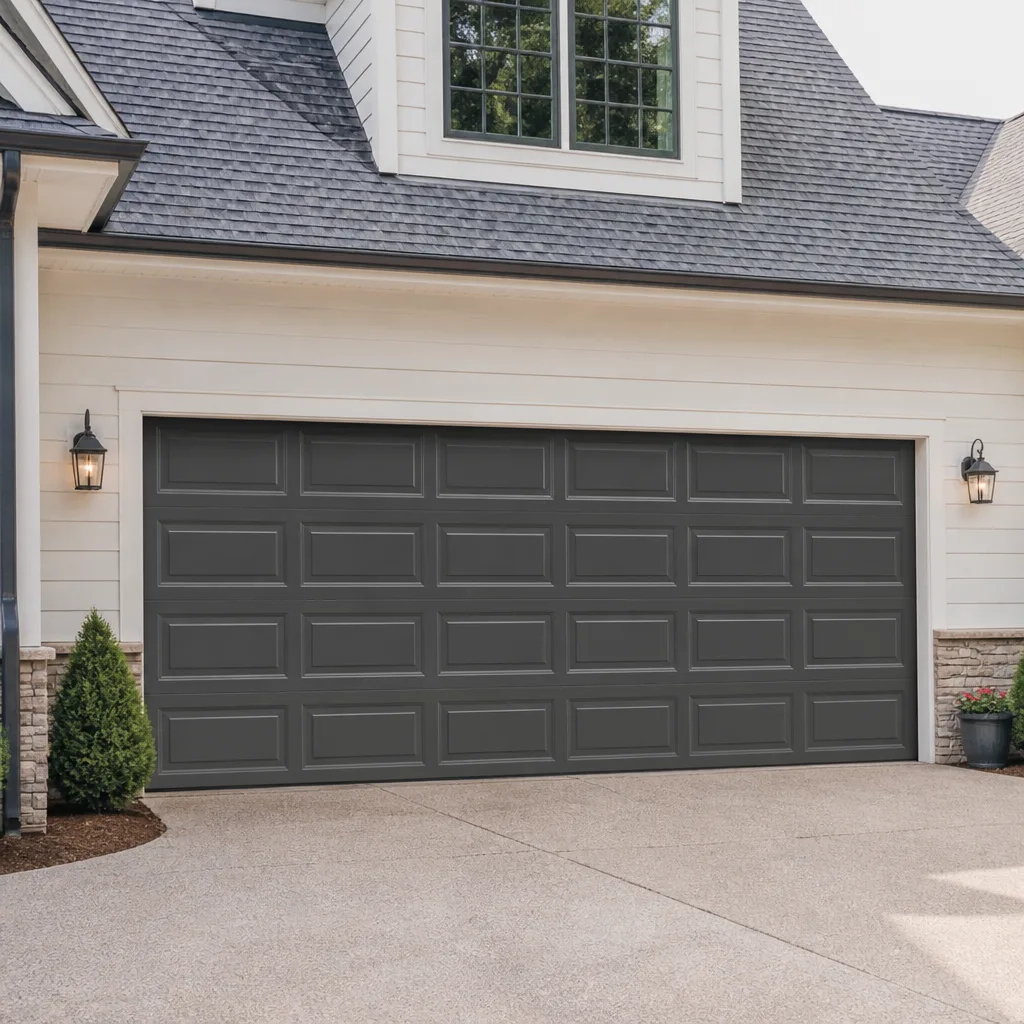 Raised-panel steel
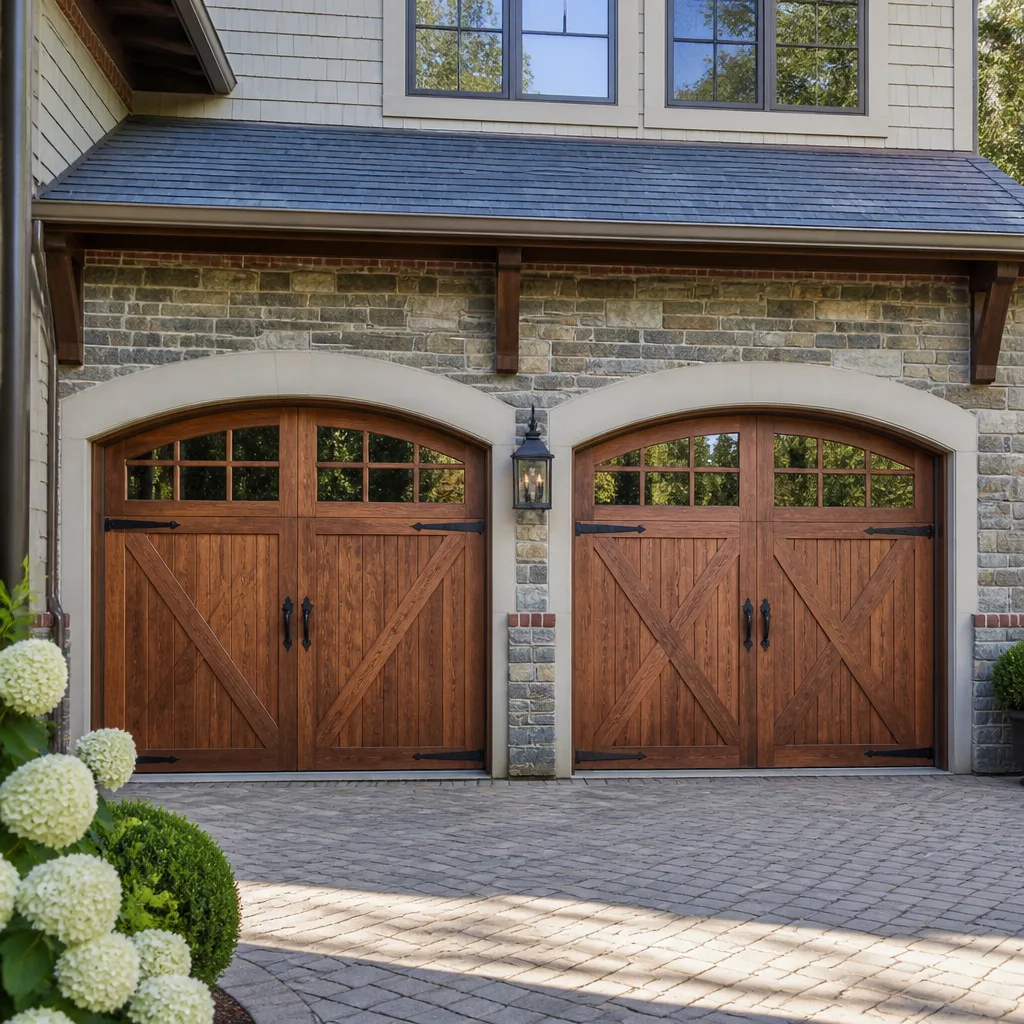 Carriage house
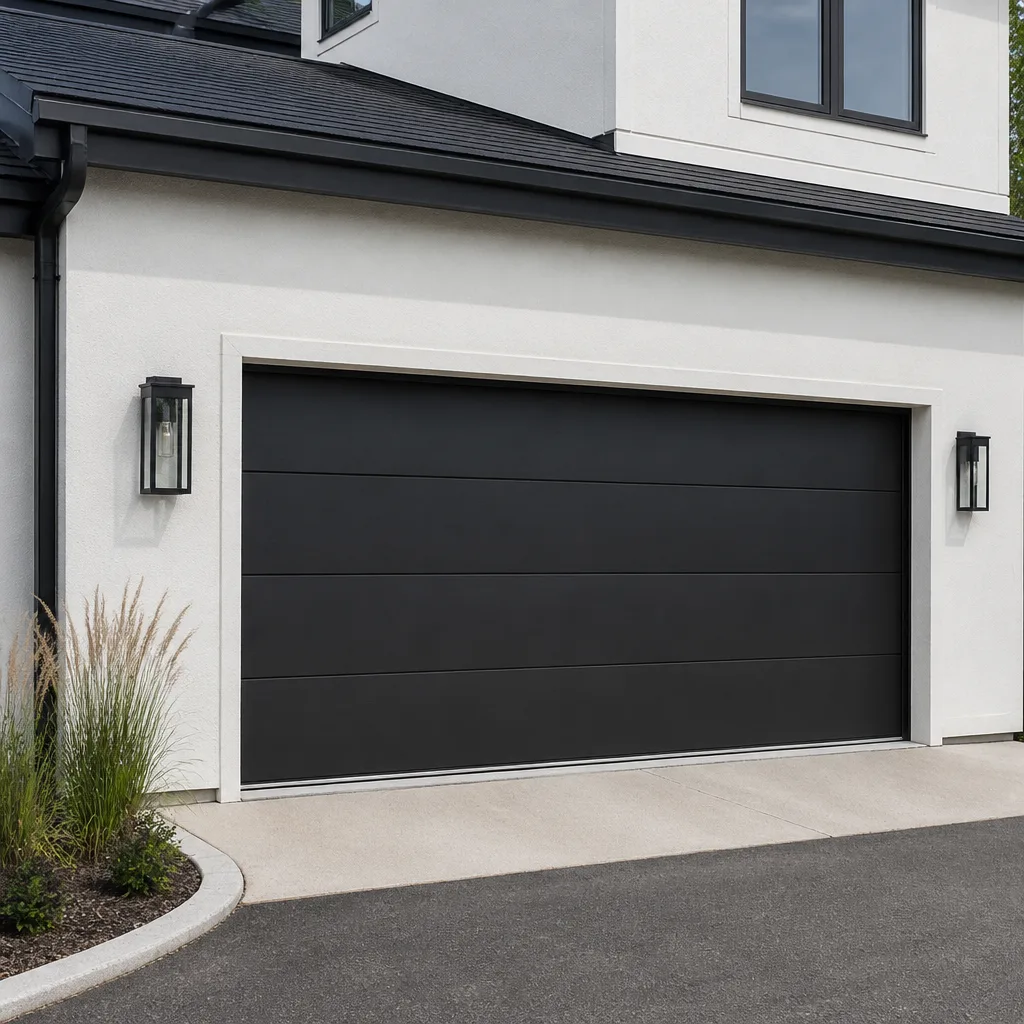 Modern flush
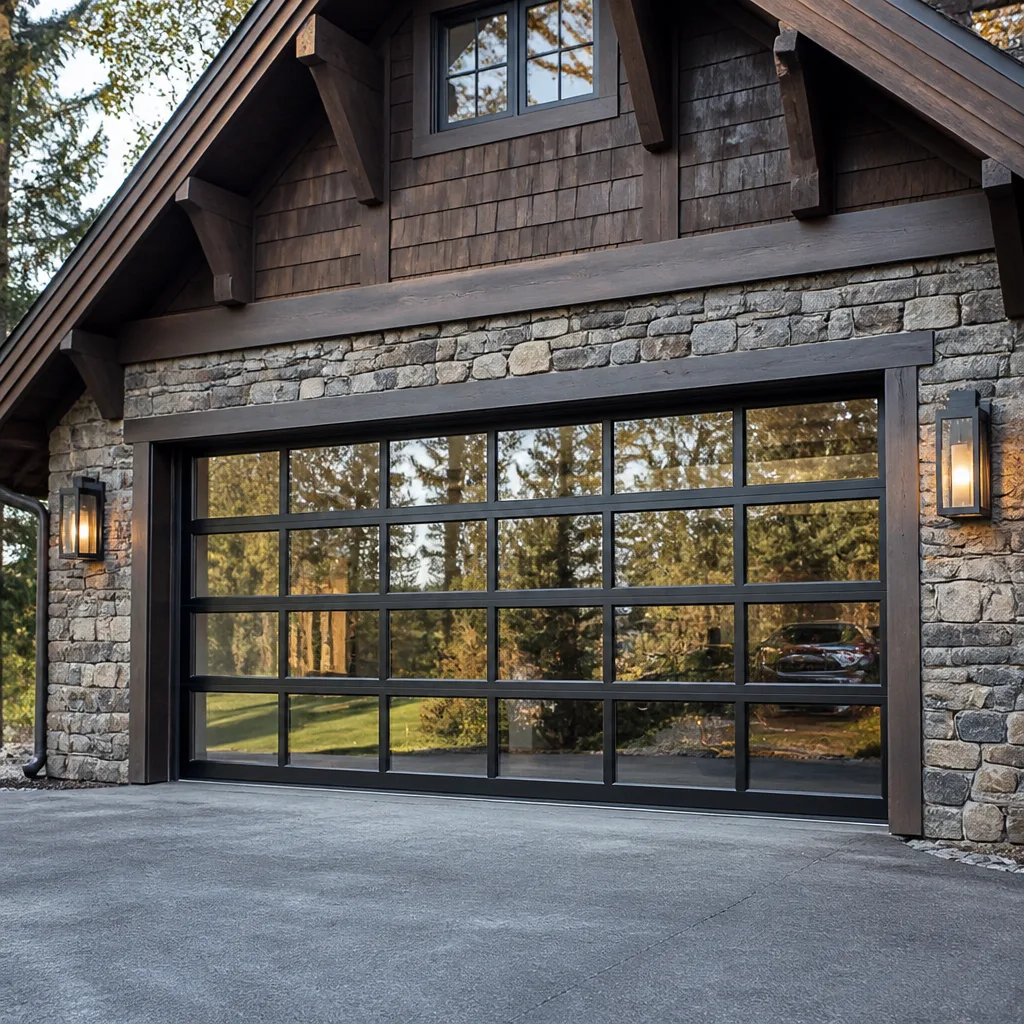 Full-view glass
 LiftMaster openers
 Chamberlain openers
Full 25-point door and opener safety check with every visit - springs, cables, rollers, tracks, and your LiftMaster or Chamberlain opener included
You get a price before we start. It does not change when the pro arrives.
Get your free estimateGarage Door Repair Maintenance Checklist for Town ‘n’ Country Homeowners
Garage door manufacturers print maintenance intervals based on average U.S. conditions. Town ‘n’ Country doesn’t run on average conditions. Summer humidity here regularly climbs past 90%, and that moisture does quiet, persistent work on steel panels, springs, cables and hinges long before the sticker on the door says it’s time.Call (833) 987-0462.
That gap matters. A schedule built for a dry climate can leave you months behind on the parts most likely to fail in a humid subtropical one. What follows is a maintenance checklist calibrated to how doors actually age in Town ‘n’ Country – what to inspect, when to inspect it, and which tasks belong in your hands versus a technician’s.
Quick Answer
A garage door in Town ‘n’ Country needs a 5-minute visual and safety check every month, a full lubrication and hardware tightening every quarter, a pre-hurricane-season inspection in May, and a post-summer corrosion check in October. Springs, cables, rollers under load and opener force settings belong to a trained professional, not a homeowner with a ladder.
Styles & brands we work with
- Raised-panel steel
- Carriage house
- Modern flush
- Full-view glass
- LiftMaster openers
- Chamberlain openers
Table of Contents
- Why a Manufacturer’s Schedule Doesn’t Fit Town ‘n’ Country
- The 5-Minute Monthly Check You Can Do Yourself
- Lubrication That Works in Florida Humidity (and What Attracts Grit)
- Testing Auto-Reverse and Photo-Eye Sensors
- Rust and Oxidation Checkpoints for Steel Doors
- The Month-by-Month Maintenance Calendar
- Tasks That Need a Pro’s Hands
- Common Mistakes to Avoid
Why a Manufacturer’s Schedule Doesn’t Fit Town ‘n’ Country
Most garage door maintenance charts were written for a national audience. They assume moderate humidity, a handful of freeze cycles, and steel that dries out between rain events. Town ‘n’ Country sits in a humid subtropical zone where the air itself holds moisture for months at a time. That changes the math on how fast certain components wear.
Here’s what that means in practice. Steel panels, hinges, and the bottom bracket stay damp longer after a rain because the surrounding air is already saturated. Bare metal that would dry in an afternoon elsewhere can stay wet for a full day or more. That’s the window where surface rust starts. Springs and cables, meanwhile, are under constant tension, and any moisture-driven corrosion at a coil or a cable strand weakens the part from the inside out.
- Springs and cables: corrosion accelerates fatigue, especially on oil-tempered springs that weren’t coated for high humidity.
- Steel door panels: the bottom section and the bottom bracket see the most ground moisture and the most splash-back from rain.
- Hinges and rollers: grit and humidity combine to wear down moving parts faster than a dry-climate schedule predicts.
- Opener electronics: a humid garage is a harder environment for the circuit board and the motor housing than a dry one.
The result is simple: if you follow the interval printed on a national manufacturer’s tag, you’re probably behind. Town ‘n’ Country homes need their doors checked on a tighter rhythm. The checklist below builds that rhythm into your year.
The 5-Minute Monthly Check You Can Do Yourself
A quick monthly inspection catches the small stuff before it turns into a repair. You don’t need tools or a ladder for most of it – just your eyes, your ears, and a few minutes. Run through these steps once a month. If anything looks off, note it and call us; free estimates are part of the deal.
- Watch the door move. Open and close it from inside the garage and listen. A well-running door is steady and quiet. Grinding, squeaking, or a shudder means something needs attention.
- Check the balance by eye. With the door closed, look at the horizontal seams. They should be level and parallel. A door that sits crooked on one side hints at a spring or cable problem.
- Look at springs and cables. From a safe distance on the ground, check for visible rust, fraying, or a gap in a spring coil. Never reach up or touch them – we’ll come to that.
- Test the door by hand (door disconnected). If your opener has a release, disengage it and lift the door slowly to waist height. It should lift with moderate effort and stay put when you let go. Call a professional if it feels heavy or won’t hold.
- Test the safety reverse and photo-eye sensors. The full test is below – run it every month. It’s the most commonly skipped step and the most important.
- Check the weather seal and bottom rubber. Look for cracking, gaps, or grit buildup where the door meets the floor. A worn seal lets in water, pests, and humid air.
- Inspect the tracks for debris. Look for leaves, sand, or loose bolts in the track. Don’t lubricate the track – clean it and wipe it down.
That’s it. Five minutes, once a month. Anything in that list that looks wrong should go on a note, and if the door won’t balance or moves roughly, call before you use the opener again.
Lubrication That Works in Florida Humidity (and What Attracts Grit)
Lubrication is the one maintenance task where the wrong product does more harm than good. Standard penetrating sprays like WD-40 work fine as a cleaner but are not a lasting lubricant – they evaporate off, and in a humid garage they leave moving parts dry and exposed. Worse, some sprays attract airborne sand and grit that then grinds into rollers and hinges.
What we recommend instead:
- White lithium grease for hinges, the bottom bracket, and the torsion spring coils (applied by a technician on springs – not a homeowner).
- Silicone-based lubricant for the opener rail, the screw drive, and any plastic components. It repels moisture and won’t attract grit the way heavy grease can.
- Light machine oil for roller stems and pivot points, applied sparingly – a thin film is enough.
- Avoid standard WD-40 as a long-term lubricant, avoid cooking sprays, and never put grease or oil on the tracks themselves.
In Town ‘n’ Country, sand and grit are real. Yards, driveways, and open lots all blow fine particulate into the garage, and anything sticky will collect it. That’s why a light, water-resistant lubricant beats a heavy grease here. Apply lubricant quarterly, and wipe away excess. A tacky surface will catch grit and accelerate wear on a roller far faster than leaving it dry.
If you’re not sure what to use on your specific door, or if the brand is Clopay, Amarr, or something else, call us and we’ll tell you what’s appropriate for that model. We work on the brand you already have.
Testing Auto-Reverse and Photo-Eye Sensors
These are the two safety features on a garage door, and they’re the most neglected. A door that closes on a person or a pet causes serious injury, and both features can fail quietly. Test them every month. It takes two minutes.
Testing the Photo-Eye Sensors
- With the door open, locate the two small sensors near the floor on either side of the door track. They should be facing each other, with a lit indicator light on each.
- Close the door using the opener button. While it’s closing, wave a broom handle or a box through the beam between the two sensors.
- The door should stop and reverse immediately. If it doesn’t, the sensors are misaligned, dirty, or faulty – and that’s a safety problem.
- Wipe the sensor lenses with a soft cloth and check again. Clean routinely; grit and spider webs cause plenty of false readings.
Testing the Auto-Reverse (Contact) Sensor
- Lay a piece of wood or a brick flat under the door in its path.
- Close the door using the opener. When the door hits the object, it should reverse within a second.
- If it doesn’t reverse, the opener’s force setting is too high or the mechanism has failed. Adjusting opener force limits is a technician task – force settings set too high override the safety system.
We can’t overstate this: if either safety test fails, don’t use the door until it’s fixed. On any opener – Chamberlain, Genie, LiftMaster, or another brand – the force settings and reverses are part of what we check on every service call. If you want a garage door opener repair visit to check the sensors, that’s a routine job and a free estimate.
Rust and Oxidation Checkpoints for Steel Doors
High humidity, steady rain, and warm temperatures combine into a rust engine. Steel is the most common garage door material in Town ‘n’ Country, and it will rust faster here than the manufacturer’s warranty assumes for average conditions. This is the part of the checklist we’ve watched homeowners skip most often.
Where to Look
- The bottom section of the door: rain splash and ground moisture hit this panel hardest. Look for brown flecks along the bottom seam.
- The bottom bracket and the bottom corners: the spots where hardware meets the panel trap moisture in the gap.
- Hinges and screws: rust at the pivot points of hinges is an early warning sign and cheap to fix.
- Panel seams: where two panels meet, moisture collects in the horizontal channels.
- The bottom of the track: if water sits in the base of the track, that metal rusts and swells – and that’s the frame your rollers ride in.
What to Do
Rust that’s confined to a hinge or the bottom bracket is often replaceable – hardware is inexpensive, and a technician can swap it quickly. Rust that’s bubbling the paint on a panel is a bigger problem; at that point, prep, sand, and repaint may slow it, but the panel may eventually need replacement. For powder-coated doors like many Clopay and Amarr models, a coat of car wax on the exterior before the wet season is a legitimate defense.
Set a recurring reminder to inspect in October, after the summer rains have passed. That’s when oxidation is easiest to catch and easiest to fix cheaply.
The Month-by-Month Maintenance Calendar
This is the rhythm we recommend for Town ‘n’ Country homes. It front-loads the safety and structural checks before hurricane season (June through November in Florida) and builds a full inspection window after the summer’s heat and rain have done their worst.
January – February
- Post-hurricane-season hardware tightening. Check every hinge, bracket, and roller on the door for loosened bolts.
- Lubricate hinges, rollers, and opener rail (springs lubricated by a technician).
- Test safety reverse and photo-eye sensors.
March – April
- Balance test and visual inspection of springs and cables.
- Clean tracks and wipe down all moving parts.
- Schedule a pre-summer tune-up if the door is over two years old or you’ve noticed roughness.
May (Pre-Hurricane Season)
- Full structural inspection by a technician: springs, cables, drums, hinges, bottom bracket.
- Confirm the door is properly balanced and reinforced if you have a lightweight panel model.
- Check weather seal and bottom rubber; replace if worn.
- Test the opener’s auto-reverse and force settings – it’s the last check before the storm season starts.
June – September (Storm Season)
- Monthly 5-minute checks from the Quick Check list above.
- After any significant storm, inspect panels, tracks, springs, and the seal for damage.
- Don’t operate a door with a bent track or a visibly broken spring – call us.
October (Post-Summer Corrosion Check)
- Full rust and oxidation inspection of steel panels, hinges, brackets, and track base.
- Touch up any bare metal or paint chips before the next summer.
- Re-lubricate everything; the summer heat and humidity degrades lubricant faster here.
November – December
- Year-end full door inspection by a professional.
- Test safety features one final time for the year.
- Address any rough spots before the holidays when you’re more likely to need the door to work smoothly.
Post this calendar on the inside of the garage door. The two dates that matter most are May and October. If you miss both, get on the phone with us and we’ll do a full inspection that covers all twelve months of maintenance in one visit.
Tasks That Need a Pro’s Hands
Every trade has a line between “sensible owner maintenance” and “call someone.” For garage doors, that line is marked clearly. These tasks belong to a trained technician, and no amount of YouTube confidence changes that.
Springs and Cables
A torsion spring under tension can cause serious injury if it fails or is mishandled. It’s not a matter of being careful – the amount of stored energy in a wound spring is beyond what a homeowner can safely manage. Extension springs on older doors are less explosive but still dangerous. We won’t walk anyone through a spring replacement, and we strongly advise against trying. If a spring breaks in Town ‘n’ Country, call us; that’s a garage door repair and it’s a job we do regularly.
Opener Force Settings and Circuitry
Adjusting force limits on an opener is a safety adjustment. Set them too high and the door won’t reverse on contact; set them too low and the opener will stop mid-cycle. Getting them right requires an understanding of how the opener and the door’s balance interact. And for anything involving the opener’s circuit board or wiring, leave it to us – we’re not going to describe a DIY approach.
Track Realignment and Panel Replacement
A bent track throws off every roller in the door. Bending it back by hand can look fixed and still not be aligned. Panel replacement involves the door’s balance and often the springs. Both are measurement-and-judgment jobs, not force jobs.
Our technicians have up to 14 years of experience, and they’re trained on eight major brands including LiftMaster, Chamberlain, Genie, Clopay, Amarr, Wayne Dalton, Craftsman, and Raynor. If you’re ready for a proper annual inspection or a repair, call us at (833) 987-0462 for a free estimate.
Common Mistakes to Avoid
- Greasing the tracks. This is the single most common mistake. The tracks are supposed to be clean and dry; the rollers should carry the lubrication. Grease on the track catches sand and grit and turns a smooth door into a grinding one fast.
- Using standard WD-40 as a lubricant. It cleans and displaces moisture, then evaporates. In Town ‘n’ Country humidity, a dry roller rusts inside a season.
- Skipping the photo-eye and reverse tests. Owners skip these because the door “looks fine.” A failed safety reverse can injure a person or a pet, and it takes two minutes to check monthly.
- Ignoring the print schedule on a national manufacturer’s label. Those intervals don’t account for 90% humidity. Town ‘n’ Country doors need a tighter schedule, especially on steel components and springs.
- Adjusting the opener force setting upward to fix a door that won’t close. Rising force masks the real problem – a binding track, a worn roller, or a balance issue – and disables a safety feature.
- Using a pressure washer on a steel door seam. Driving water into panel seams and hinge points is the fastest way to accelerate rust. A garden hose and mild detergent, followed by drying, is safer.
- Letting the bottom rubber weather seal go untended. A worn seal lets humid air and groundwater into the garage, and it’s one of the cheapest repairs on the whole door.
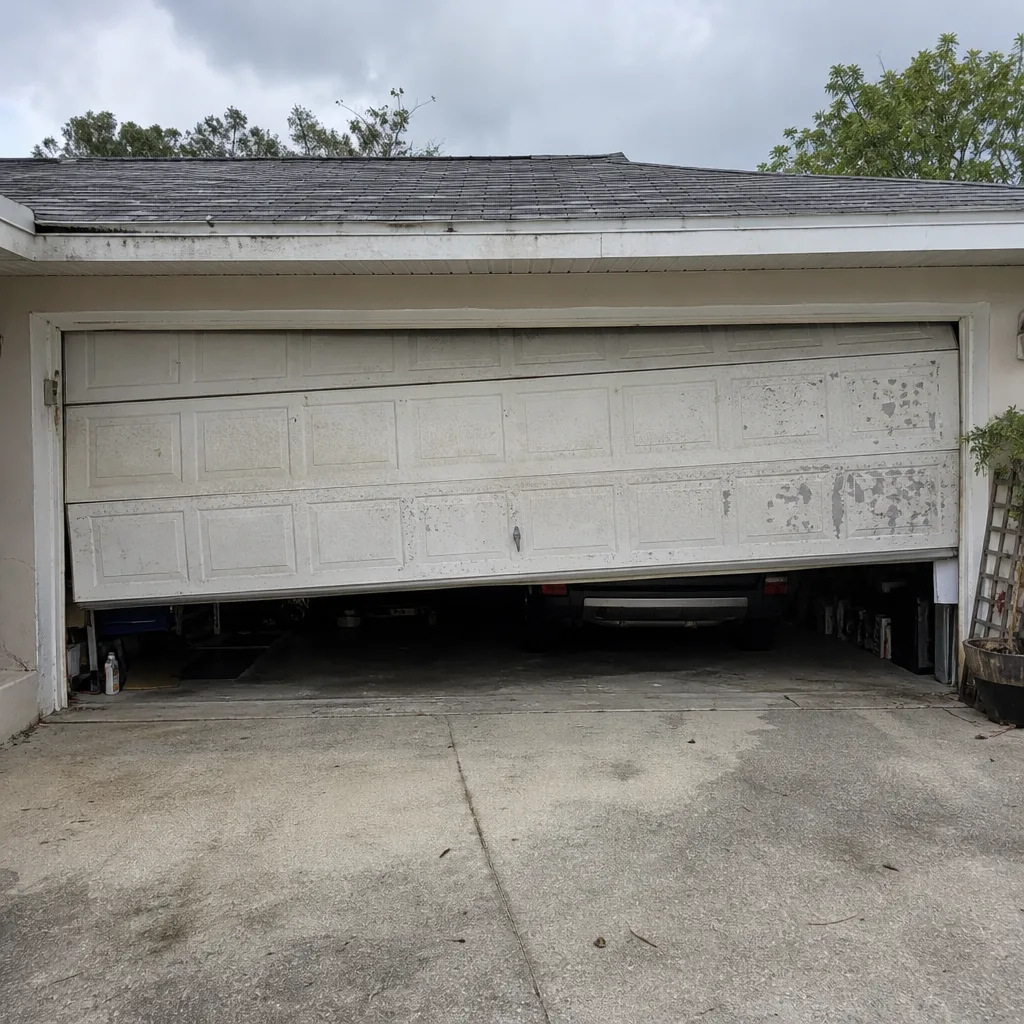
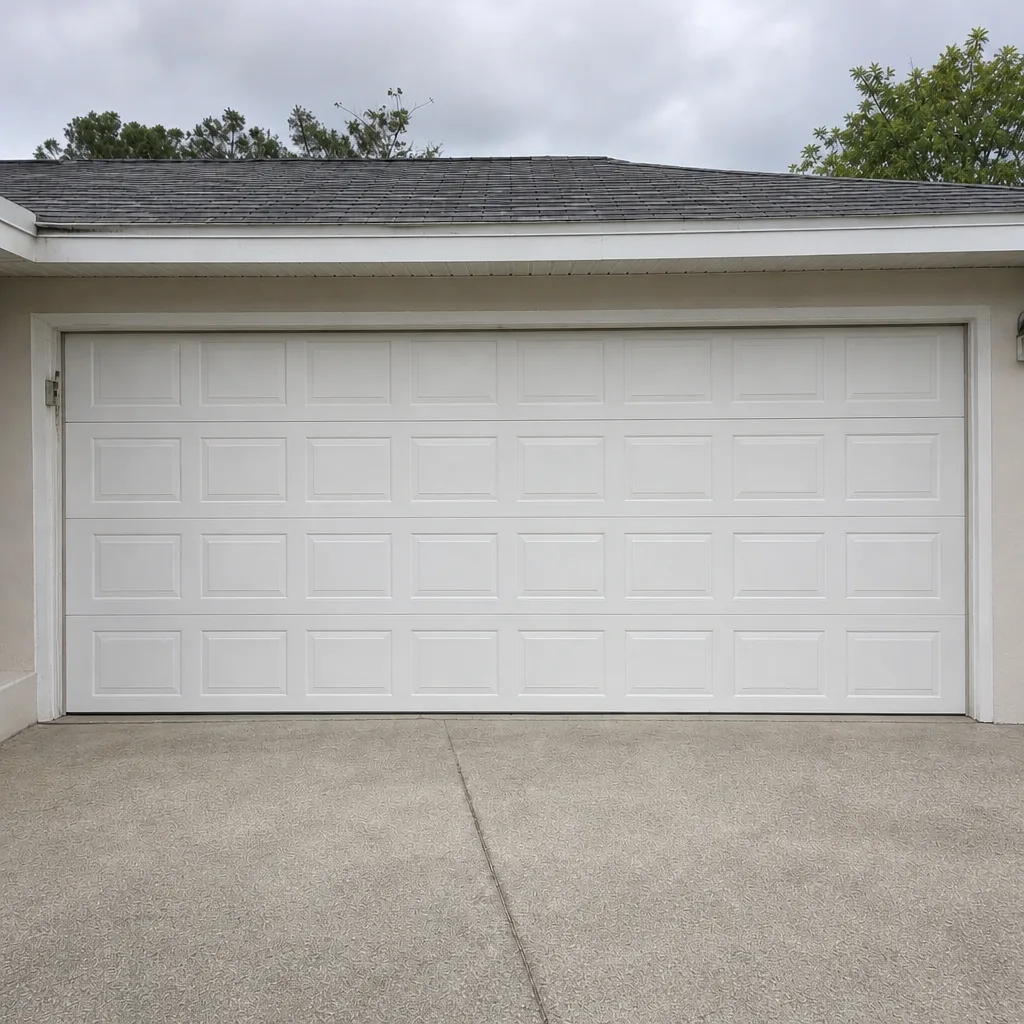
See the difference
 Before
 After
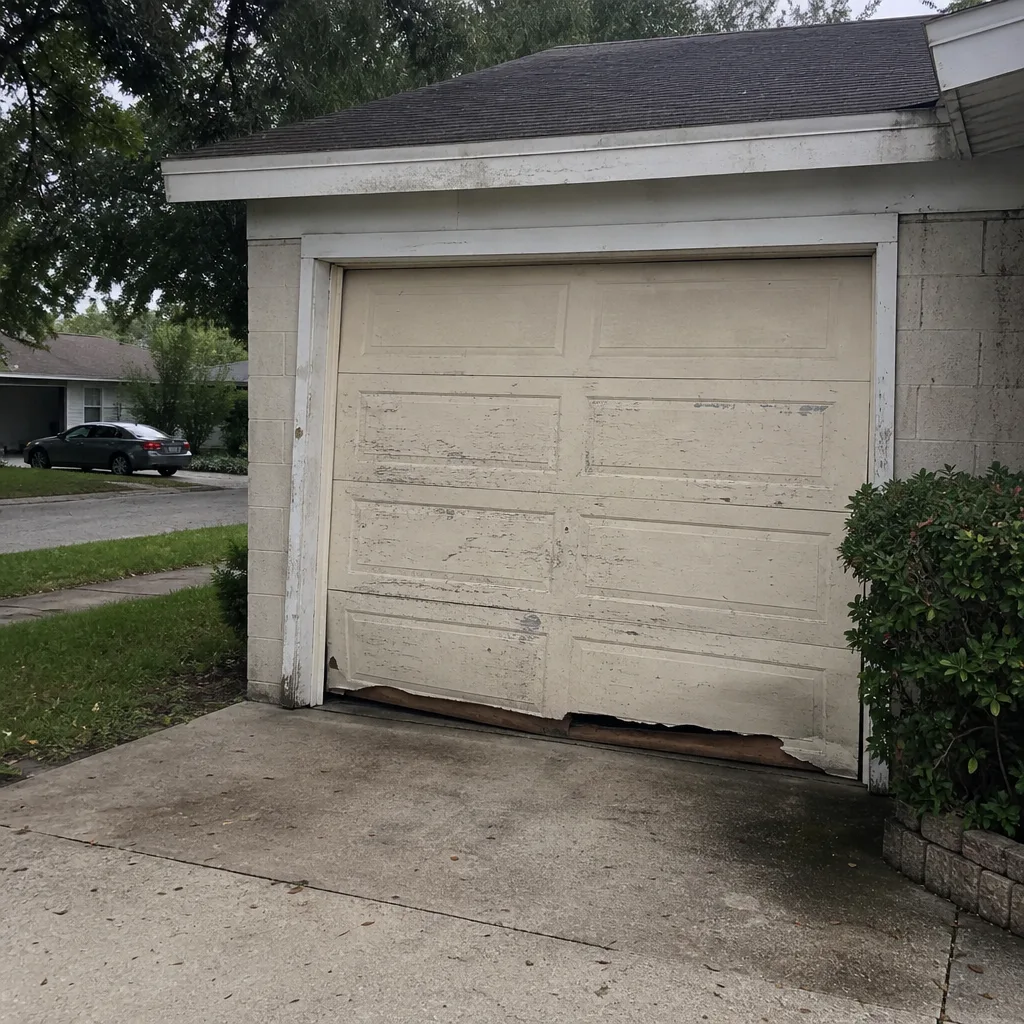 Before
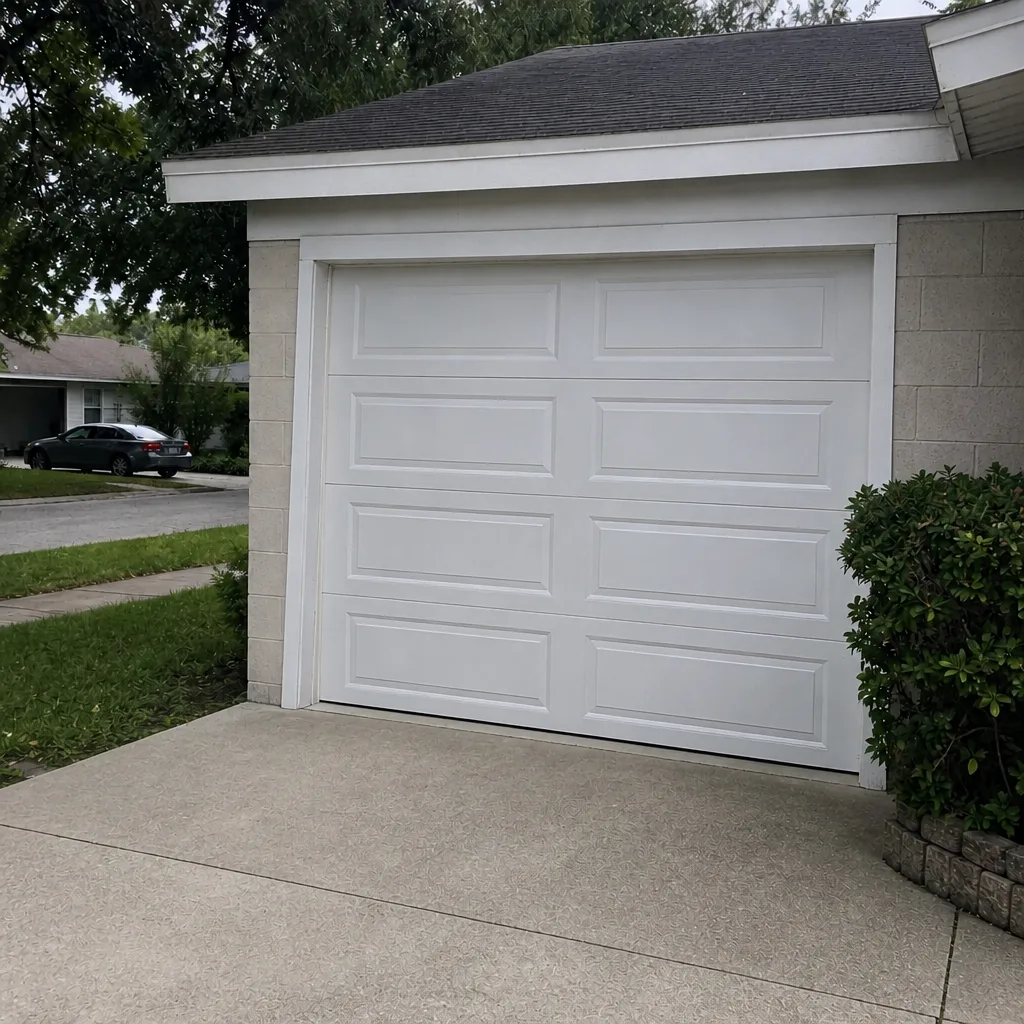 After
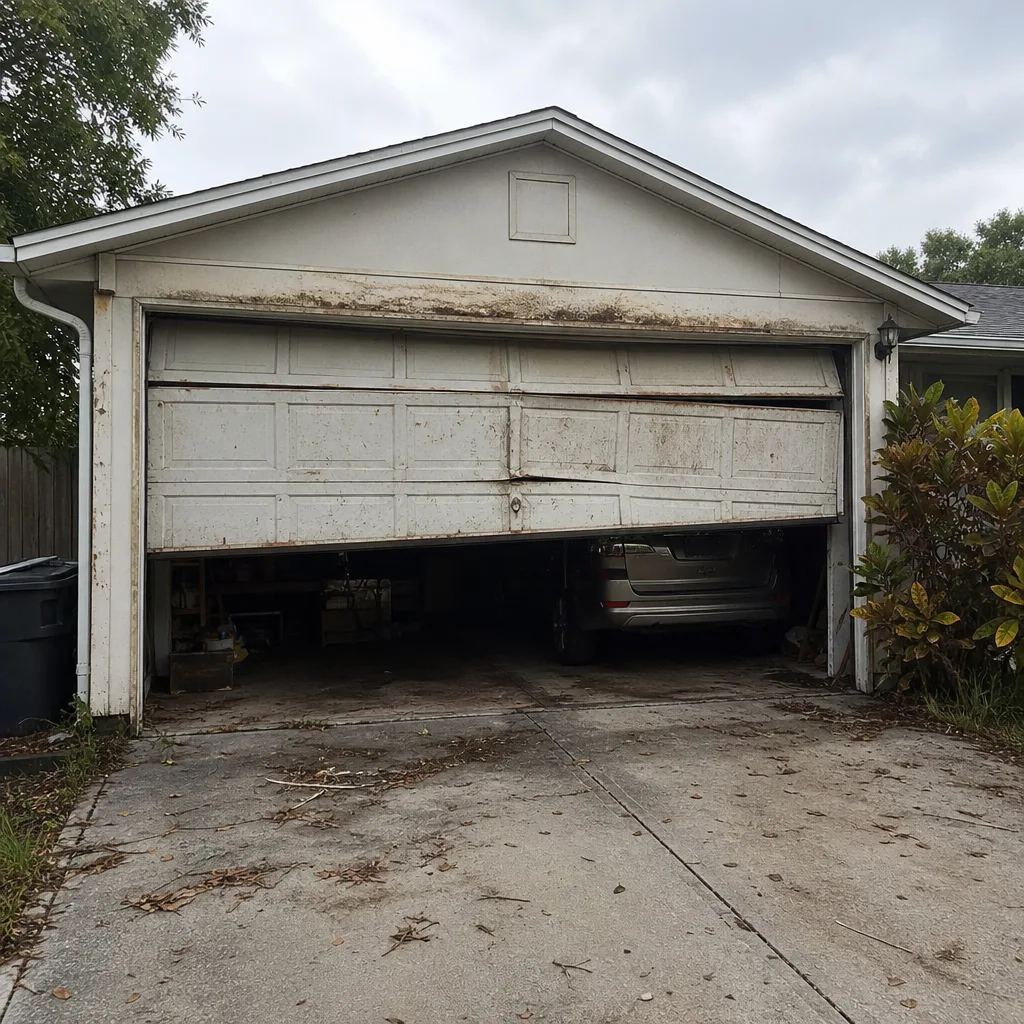 Before
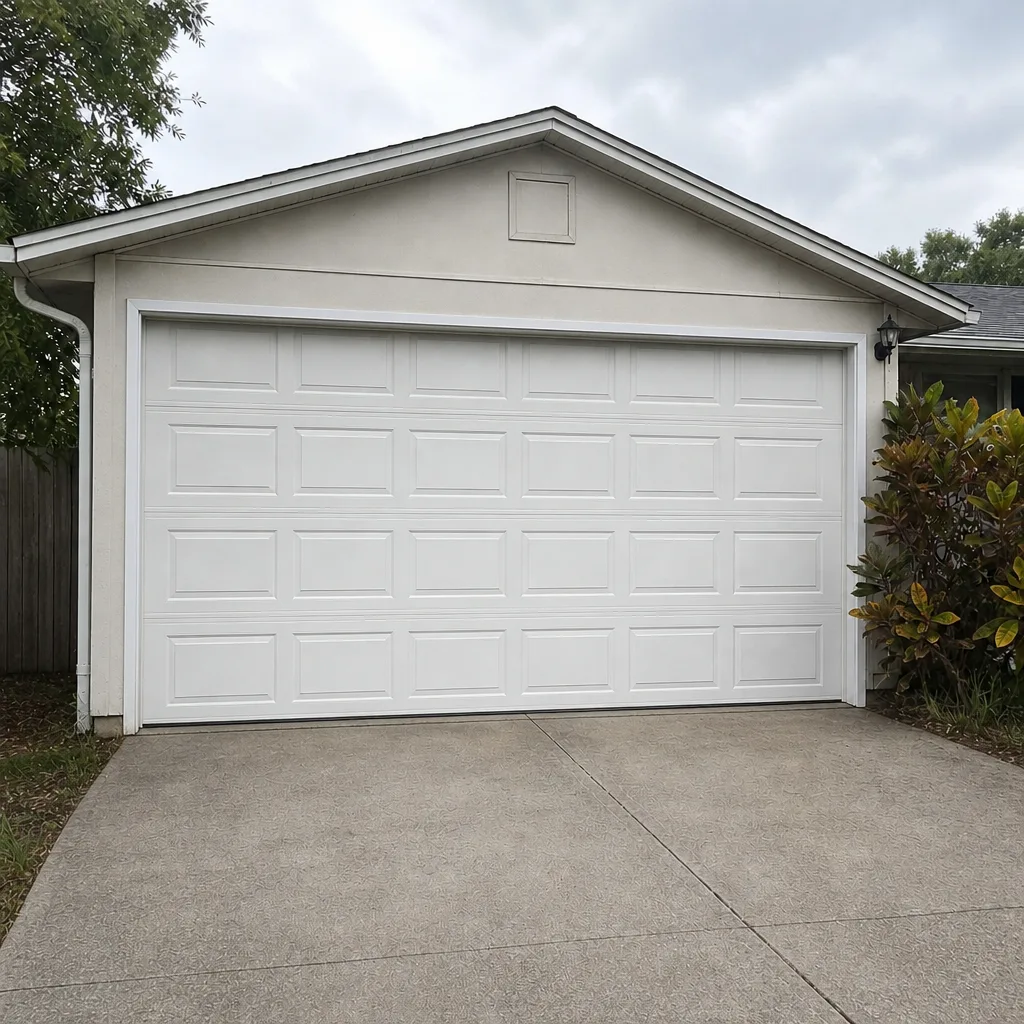 After
When to Call a Professional
Some problems are maintenance. Others are calls we make when the door has moved past maintenance. Call us the same day for: a broken spring (don’t test it), a door that won’t open or close, a door that slams shut or reverses immediately, a door that’s visibly off-track, a door that’s bent or damaged after a storm, or an opener that clicks but doesn’t move the door. Call us for safety failures too; if the reverse test or photo-eye test fails, don’t operate the door until it’s fixed. For routine annual maintenance and tune-ups, schedule a visit at your convenience – this is garage door installation and repair work in Town ‘n’ Country that Town ‘n’ Country Garage Door Repair Pros handles regularly. We offer free estimates throughout Town ‘n’ Country – call (833) 987-0462.
Frequently Asked Questions
Every month for the 5-minute safety and visual check, quarterly for lubrication, an annual pre-hurricane-season inspection in May, and a post-summer corrosion and tune-up visit in October. The humidity here makes the timeline tighter than a national manufacturer’s schedule assumes.
Routine maintenance and tune-ups start at a modest fixed fee, and the exact price depends on the door type and what’s found. We quote and agree on the price in writing before any work starts, so there’s no surprise on the invoice. Call (833) 987-0462 for an exact quote on your door – estimates are free.
You can safely lubricate hinges, rollers, and the opener rail with white lithium or silicone lubricant. Do not lubricate the springs or cables yourself; those are under high tension and need a technician’s hands. If in doubt, call us.
No, not in the sense of a surprise bill. We quote based on what we see, agree on the price in writing, and the written estimate is the price for the work described. If we find something additional during the job, we stop and get your approval before doing it.
The local professionals we connect you with are licensed and insured as their state requires. Our technicians have up to 14 years of experience and are trained across eight major brands, including LiftMaster, Chamberlain, Genie, Clopay, Amarr, Wayne Dalton, Craftsman, and Raynor.
A door that feels very heavy to lift by hand, a door that opens a few inches and stops, a visible gap in the spring coil, a loud bang from the garage, or a door that sits crooked when closed. A snapped spring can’t be repaired safely by a homeowner – call us.
The Bottom Line
The manufacturer’s sticker on your door assumes average U.S. conditions. Town ‘n’ Country doesn’t run on averages. Following the checklist above – the monthly 5-minute check, quarterly lubrication, a May pre-hurricane inspection, and an October corrosion inspection – keeps a garage door running smoothly here far longer than a generic schedule would. When the work crosses into springs, cables, opener force settings, or track damage, stop and call a professional. The cost of a free estimate and a proper repair is far less than the cost of waiting for a piece of hardware to fail at the worst moment. For all of it – spring repairs, opener work, new installations, and emergencies – we’re your call in Town ‘n’ Country. Call (833) 987-0462 for a free estimate.
You can also find us through our parent site at Town ‘n’ Country Garage Door Repair Pros.
Written by the team at Town ‘n’ Country Garage Door Repair Pros.