Last updated November 23, 2026
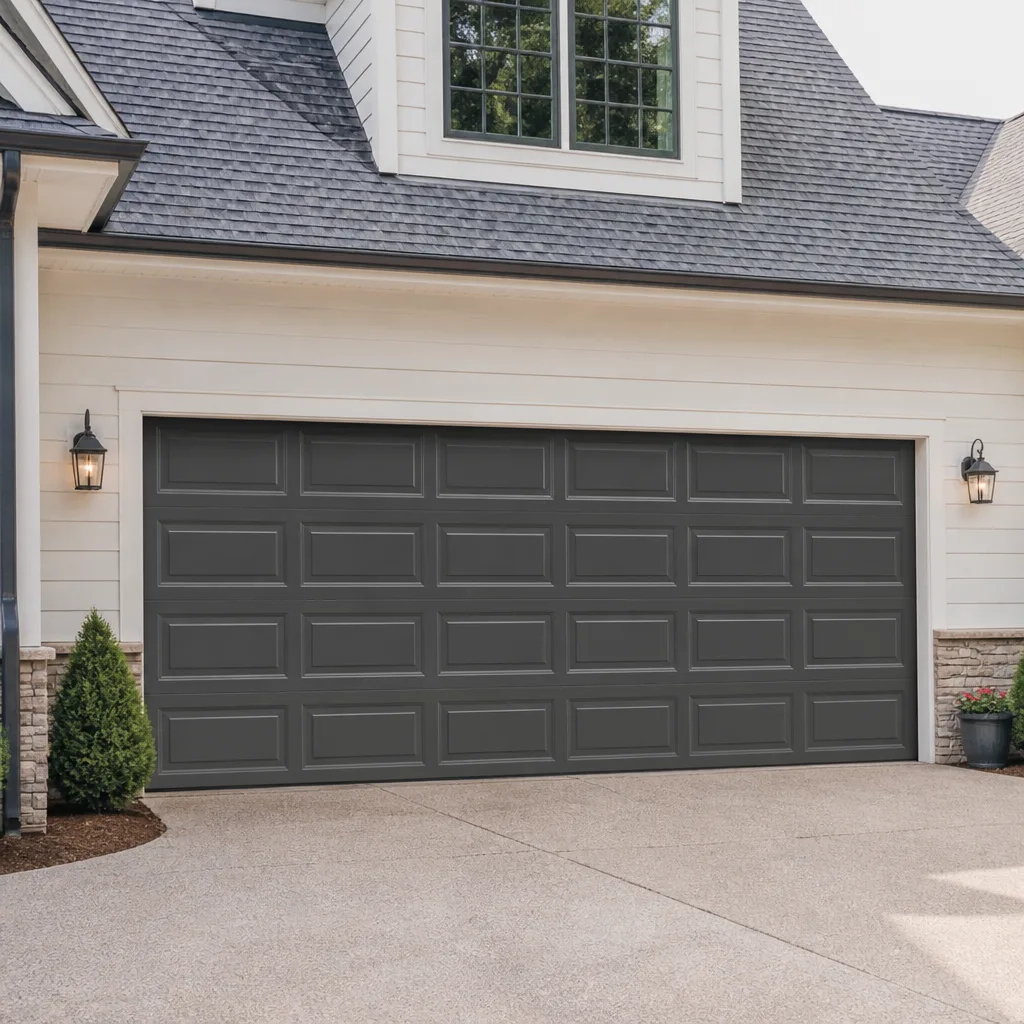 Raised-panel steel
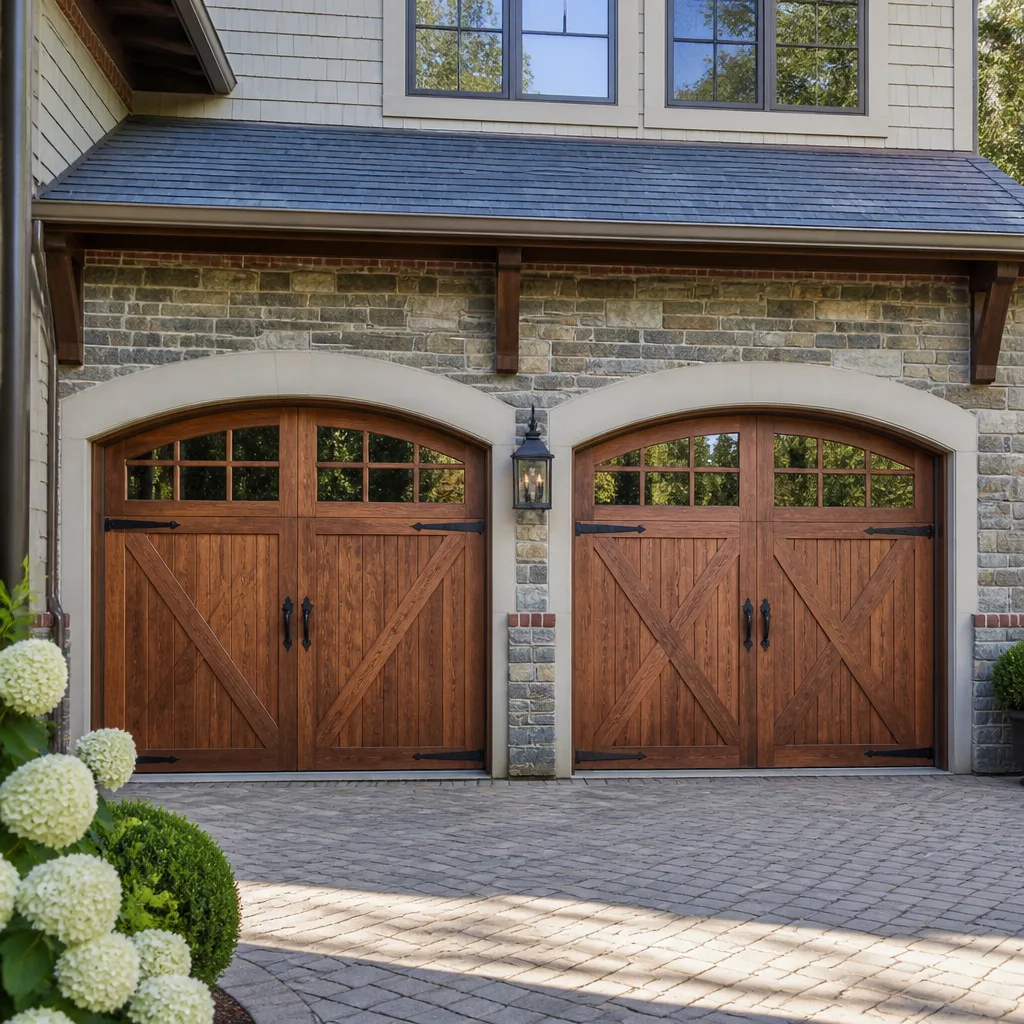 Carriage house
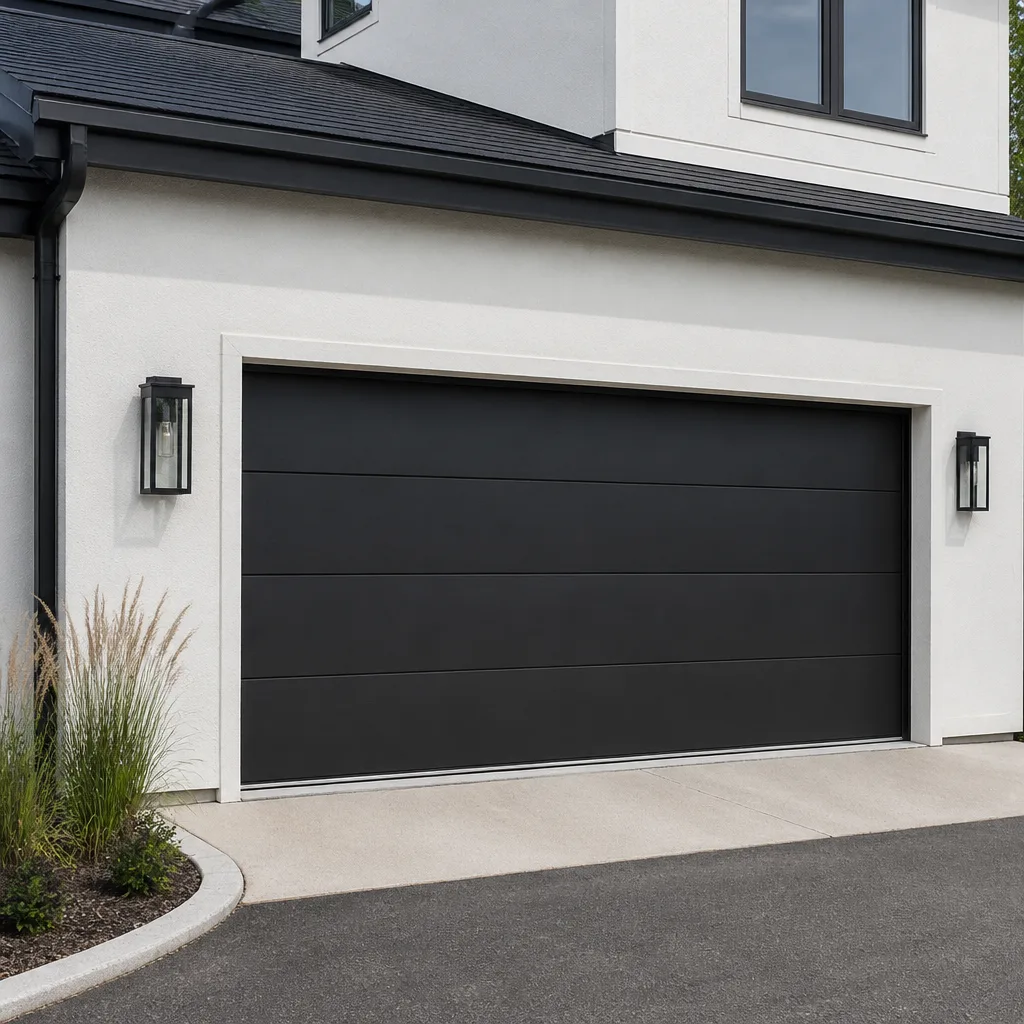 Modern flush
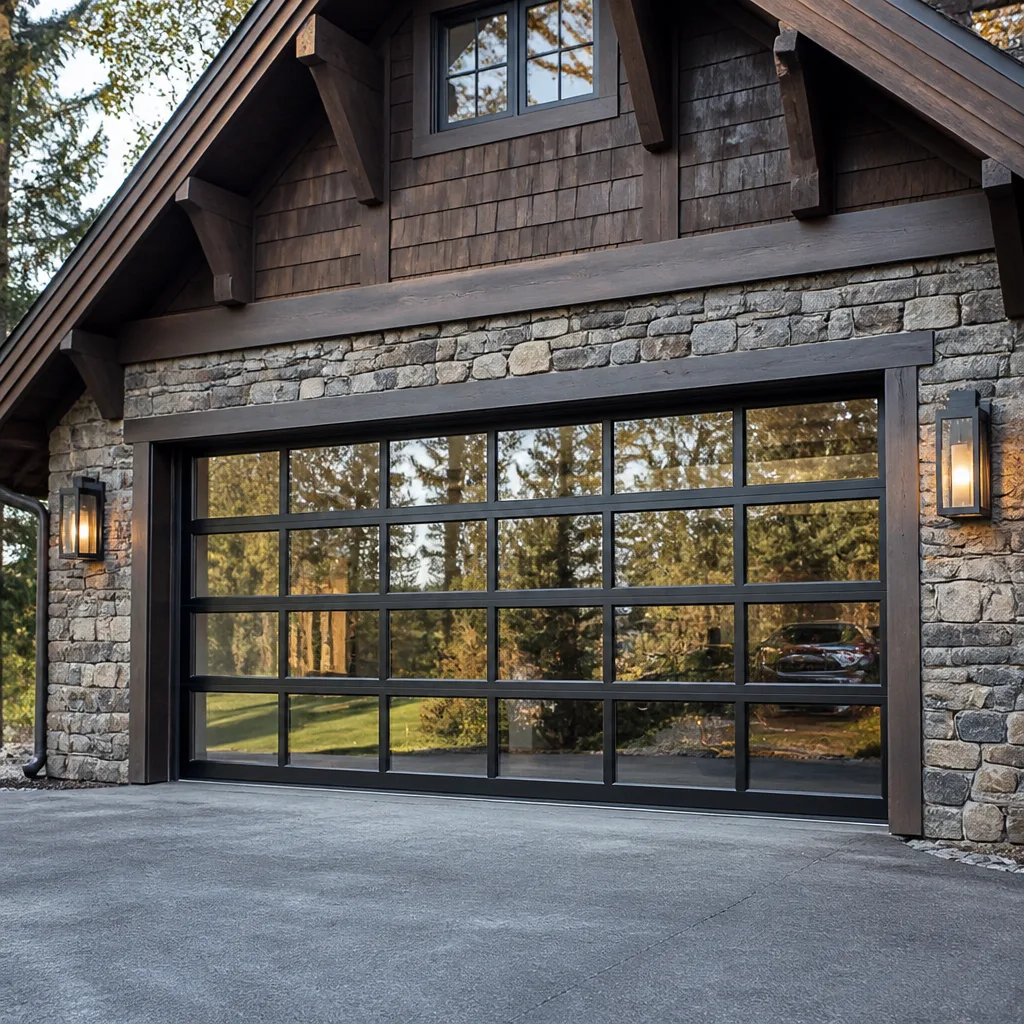 Full-view glass
 LiftMaster openers
 Chamberlain openers
Full 25-point door and opener safety check with every visit - springs, cables, rollers, tracks, and your LiftMaster or Chamberlain opener included
You get a price before we start. It does not change when the pro arrives.
Get your free estimateHow to Hire a Garage Door Contractor in Town ‘n’ Country: A Step-by-Step Guide
Most homeowners hire a garage door contractor the same way they hire a plumber: they search, they call whoever answers, they say yes. That’s the wrong order, and it’s how people end up paying deposits to someone with a magnetic sign on a truck and no license number on the invoice. The garage door is the largest moving object on a house, and the springs that lift it hold enough tension to injure a trained adult who gets careless. Choosing who works on it deserves more than a phone call. This guide walks you through the vetting process we’d want our own neighbors in Town ‘n’ Country to follow, from verifying a Florida license to reading three different quotes side by side without getting fooled by parts markup.
Quick Answer
To hire a garage door contractor in Town ‘n’ Country, verify the company’s license on the Florida DBPR website, request three insurance documents (general liability, workers’ comp, and commercial auto), insist on a written scope of work with line-item pricing before any work begins, and compare quotes only when you know what parts each one lists. A legitimate contractor will hand over all of it without hesitation. One who stalls on the paperwork is telling you something.
Styles & brands we work with
- Raised-panel steel
- Carriage house
- Modern flush
- Full-view glass
- LiftMaster openers
- Chamberlain openers
Table of Contents
- Why Curb Appeal Isn’t a Hiring Standard
- What Florida Requires and How to Verify It
- The Three Insurance Documents to Request
- Why a Written Scope of Work Beats a Verbal Quote
- Red Flags When Storm Demand Spikes
- How to Compare Quotes With Different Parts
- Repair vs. Replace: When to Ask the Right Question
- What You Should Never Attempt Yourself
- Brand Fluency and Why It Matters
Why Curb Appeal Isn’t a Hiring Standard
A clean truck and a friendly phone manner tell you nothing about whether the person showing up carries insurance or has ever opened a torsion spring safely. In our experience, the contractors who do the best work are often the ones who show up with a clipboard and a paper trail, not a sales pitch. That’s the mindset shift this section is asking for: treat the door like a structural element of the house, not a gadget.
Here in Town ‘n’ Country, a lot of homes are one-story ranch and split-level builds with a single wide door or a matched pair. The humidity runs high for months at a time, and that shows up in the hardware. Steel panels start showing surface rust at seams and bottom edges, hinges get stiff, and opener chains pick up grit that turns into grinding long before the motor fails. None of that is dramatic, but a contractor who understands it will check for it without being asked.
What you’re hiring for, then, is a specific skill set:
- Safe work with torsion and extension springs under tension
- Correct balancing and track alignment after replacement
- Opener diagnostics, including board, gear, and sensor issues
- Panel and section replacement matched to your door’s manufacturer profile
- Familiarity with the brand on your door, not a “we’ll figure it out” attitude
If a company can’t tell you whether your opener is a belt-drive or a chain-drive over the phone, or what brand your door is likely to be based on the panel profile, that’s already a signal. Brand fluency isn’t a luxury here, it’s a core competency. We work on the brand you already have, which is why we’ve built coverage around the doors and openers most Town ‘n’ Country homes already have installed. You can start by seeing what garage door repair actually involves when a trained tech rolls out, because the process is not as universal as people assume.
What Florida Requires and How to Verify It
Florida requires garage door installers and contractors to hold a state-issued license, most commonly through the Department of Business and Professional Regulation (DBPR). Unlicensed activity is a criminal offense in Florida, and it’s the single most common complaint pattern when storm damage drives a wave of contractors into an area. Learning to verify licensing in under two minutes is the highest-value skill in this guide.
Here’s the step-by-step:
- Ask the contractor for their license number in writing, not just the number on a truck sign. Ideally it’s printed on the estimate or the invoice header.
- Go to the DBPR website (myfloridalicense.com) and open the license lookup tool.
- Enter the number or the business name and confirm the license is active, not lapsed or revoked.
- Check that the license type matches the work. A specialty contractor license for garage doors or a general contractor license is different from an occupational license, which is just a business tax receipt and does not authorize construction work.
- Confirm the license shows the correct address for the business and that the qualifier listed matches who’s actually coming out.
Two minutes. That’s the whole check. Any legitimate company will wait while you do it. A contractor who says “we’re licensed, don’t worry about it” and won’t give you a number to search is one to hang up on.
One more local note: Hillsborough County and the City of Tampa have permitting requirements for certain structural work, including some full garage door replacements, but the specific rules and thresholds change. Rather than quote a rule that may not apply to your address, ask the contractor directly whether a permit is needed for your job and confirm with the county or city building department yourself. A pro will know who to call.
The Three Insurance Documents to Request
License verification tells you a contractor is legally allowed to work. Insurance verification tells you that if their crew damages your car, dings your door, or gets hurt on your property, you’re not the one paying for it. The three documents to request before anyone touches the door:
- General liability insurance – covers property damage. If an installer drops a panel on your car or a spring recoil cracks the drywall in the garage, this is the policy that pays.
- Workers’ compensation insurance – covers injuries to the crew while on your property. This one matters more than homeowners realize: if an uninsured worker gets hurt on your property, you can be exposed to liability claims.
- Commercial auto insurance – often overlooked, but if the contractor’s vehicle damages your property or a third party’s in your driveway, you want their policy to respond.
Ask for a certificate of insurance for each and verify that the coverage is current. Some companies will email you a certificate directly; others will have their insurer send it. Either is fine. What isn’t fine is a promise that the paperwork “will get sent over later.”
This is where a lot of the fly-by-night operators disappear. Someone with a pickup truck, a helper, and no commercial policy will happily take a deposit and start work, but the moment something goes sideways, the homeowner is exposed. In an area like Town ‘n’ Country, where the housing stock is spread across suburban blocks and semi-rural lots, the exact type of crew showing up varies more than it does in dense city cores. Ask the questions anyway.
Once you’ve got the paperwork sorted, you can move on to choosing among the door and opener options themselves – our guide to garage door opener repair covers what happens when the opener becomes the primary issue rather than the door.
Why a Written Scope of Work Beats a Verbal Quote
A verbal quote is worth what you paid for it. A written scope of work is a contract. The two aren’t the same document, and they carry different weight when something goes wrong.
A proper written scope should include, at minimum:
- The exact parts being replaced, by brand and model or part number where applicable
- A clear line for labor separate from parts
- Whether the price includes haul-away of the old door or spring
- Whether the price includes balancing and safety testing upon completion
- Whether any permit is required and who is pulling it
- The written guarantee terms (parts warranty and labor warranty, stated separately)
- Payment schedule – deposit amount (if any), progress payments, and final payment terms
Insist on seeing the parts line items. “We’ll replace the springs” is not a line item, it’s a verbal promise. “Two torsion springs, 0.250 x 2″ x 28″ oil-tempered, matched pair, plus labor and balancing” is a line item. The difference matters when you’re comparing quotes, and it matters even more if there’s ever a warranty question.
This is also where you get to test the “no surprise invoice” promise. Any reputable contractor will quote a price and confirm it in writing before starting. If the price changes when they arrive on site, that should be a conversation you have before they begin, not an adjustment you discover on the final invoice. If you ask them to put a guaranteed price ceiling in writing and they won’t, that’s the answer.
Red Flags When Storm Demand Spikes
Every time a major storm moves through the Tampa Bay area, search volume for “garage door repair near me” spikes, and unlicensed operators follow the traffic. Not all of them are malicious. Some are just opportunistic and unqualified. Either way, the red flags worth knowing are consistent:
- Cash-only deposits. A contractor who wants a large cash deposit up front, before materials are ordered, is asking you to take all the risk.
- No physical address or no business license number on paperwork. Both should be on the invoice.
- Pressure to sign today for a “storm special” price. Real contractors don’t operate on countdown clocks.
- Door-to-door canvassing after a weather event. Legitimate companies rarely cold-knock residential doors after storms.
- Refusal to provide insurance certificates. Covered in the previous section, but it bears repeating.
- Quotes that don’t break out parts and labor. A single round number with no breakdown is a warning.
- “We work on all brands.” At face value this sounds helpful, but if they can’t name the brands they’re actually trained on, the claim usually means “we’ll call someone else.”
None of this is unique to Town ‘n’ Country. But because much of the area sits outside the dense urban core, storm-driven contractor waves tend to hit here slightly differently: the established local companies are booked solid, and the vacuum gets filled by whoever shows up. Knowing the red flags catches most of the problem before it starts.
For emergency situations – a door that won’t close, a snapped spring late in the day, an opener that’s dead – the urgency is real and the temptation to skip vetting is stronger. Don’t. Even in an emergency, a quick call for a license number and a verbal confirmation of insurance is worth sixty seconds.
How to Compare Quotes With Different Parts
Three quotes for the same job often come in wildly different, and the difference is almost never the labor rate. It’s the parts. One contractor lists OEM (original equipment manufacturer) parts, one lists aftermarket equivalents, and one lists “builder grade” without naming a manufacturer. All three could be “replacing your door” and none of them are describing the same product.
Here’s how to normalize the comparison:
- Get the part brand and model on each quote. If it’s missing, ask for it in writing before you compare.
- Separate OEM from aftermarket from builder grade. OEM means the same manufacturer as your door. Aftermarket is a third-party equivalent, sometimes excellent and sometimes not. Builder grade is typically the least expensive option installed by the original home builder – usually fine, but not premium.
- Check the warranty each one carries. A builder-grade panel with a one-year warranty and an OEM panel with a ten-year finish warranty are not the same product at the same price.
- Confirm labor and haul-away are in the price. A low door price with a separate install fee and a separate disposal fee can be more expensive than a bundled quote.
- Ask whether balancing, safety testing, and final adjustment are included. They should be. If they’re add-ons, add them into the total.
For a full replacement, the comparison also has to factor in lead time. Doors are ordered, measured to fit, and scheduled – not pulled off a truck. That’s why for replacement or new installation we never promise same-day service; we schedule a measure and put a written price in front of you. If you’re at the stage where a full install is on the table, our garage door installation page lays out what the process actually involves from measure to final balance.
On the brand side, when you’re comparing quotes for a replacement, it helps to know which brands your installer actually has experience with. Amarr, Wayne Dalton, Craftsman, and Raynor doors each have different profile options and hardware conventions, and a pro who works with them regularly will know how to match your existing architecture better than someone reading a spec sheet for the first time.
Repair vs. Replace: When to Ask the Right Question
One of the quiet failure modes in this trade is a contractor who pushes replacement when repair would do, or who patches a door that’s genuinely at end of life. The honest answer depends on age, damage extent, and the cost of the repair relative to the door’s remaining life.
General guidance on when each makes sense:
- Repair: a single broken spring on an otherwise healthy door, a failed opener on a door in good shape, a bent panel that can be replaced individually, a track that’s come out of alignment
- Replace: widespread rust-through on steel panels, a door that’s been hit hard enough to compromise the structural rails, repeated opener failures on an aging unit, or a door style that’s become a maintenance problem every season
There’s also the humidity factor. Here in Town ‘n’ Country, steel doors that aren’t maintained start showing corrosion at seams, hinges, and bottom edges much faster than in dry climates. A door that would last twenty years in Arizona may need attention here sooner, and a good contractor will tell you that plainly rather than letting you discover it slowly.
If you’re on the fence, ask the contractor to walk you through the trade-offs out loud, using your specific door. If they can’t, that’s a signal. If they push for a full replacement on a door that only needs a spring, find someone else.
What You Should Never Attempt Yourself
We need to say this plainly: garage door springs and the cables under tension on torsion systems are among the most dangerous components in a home. Torsion springs are wound to hundreds of pounds of force, and a torsion bar under load can cause serious injury – sometimes fatal – to a person who doesn’t have the training and the tools to handle it. Extension springs carry the same risk when they snap without containment.
We are not going to give step-by-step instructions for spring work. Here’s what you should know instead:
- Replacing springs, rewinding torsion bars, and working on cables are all professional-only tasks.
- Opening the cover on an opener with the power on is not a homeowner task either – even at low voltage, opener boards carry stored current.
- If you can see that a spring has snapped and the door won’t lift, don’t force it. A door held by one compromised spring can come down hard.
- Don’t try to “help” the door by pulling or pushing while it’s operating. If it’s not moving under its own power, it’s not safe to assist.
Your role before a pro arrives is confirming the door is closed, disconnecting power if you can do so safely at the wall, and waiting. That’s it. Anything past that isn’t worth the risk. Springs, openers, panels, full installs – one call covers it, and the reason to make that call isn’t convenience, it’s that this is one of the few home repairs where “I’ll just try it myself” has a genuine chance of sending someone to the hospital.
Brand Fluency and Why It Matters
Brand matters more than most homeowners realize. Panels, hinges, rollers, and opener components aren’t universal. A contractor whose experience is concentrated on one or two brands will struggle with the hardware conventions of another, and the workaround is often to swap in non-matching parts rather than source the right one. That’s a shortcut you don’t want on your door.
We’re trained and equipped to service eight of the most common garage door and opener brands: LiftMaster, Chamberlain, Genie, Clopay, Amarr, Wayne Dalton, Craftsman, and Raynor. Between those eight, the overwhelming majority of residential doors in Town ‘n’ Country are covered, which means you almost never hear “we don’t work on that.” Our technicians have up to 14 years of experience, and that experience is applied to the brand on your door rather than a generic “we’ll figure it out.”
When you’re vetting a contractor, ask: which brands do you work on, and which opener platforms are you certified on? Watch how they answer. A pro who reels off the list without hesitation and can tell you the difference between a Genie belt-drive and a LiftMaster chain-drive is one to keep. A pro who says “all brands” and pivots to a price is one to check the license on first.
You can see the full picture of what we handle, and how we work, on the Town ‘n’ Country Garage Door Repair Pros page.
Common Mistakes to Avoid
- Hiring on the first quote. A single quote gives you no baseline. Three quotes with line-item parts is the minimum for a fair comparison, and it takes less time than you think.
- Paying a large deposit in cash. Deposits are normal for parts; cash-only deposits before a written scope exist are not. Pay by traceable method whenever possible.
- Skipping the insurance request. Homeowners skip this because it feels awkward. It shouldn’t – any pro expects the question and will hand over certificates without blinking.
- Assuming “garage door repair near me” results are all legitimate. Paid ads and top organic results don’t verify licensing or insurance for you. The DBPR check does.
- Saying yes to a verbal quote with no written scope. If it isn’t on paper with parts, labor, and warranty spelled out, it isn’t a real quote.
- Comparing quotes with different parts. A builder-grade panel and an OEM panel are not the same product. Compare apples to apples or don’t compare.
- Trying to save money on the spring. Spring work is the single most dangerous piece of this trade. The savings from a DIY attempt are not worth the risk, ever.
See the difference
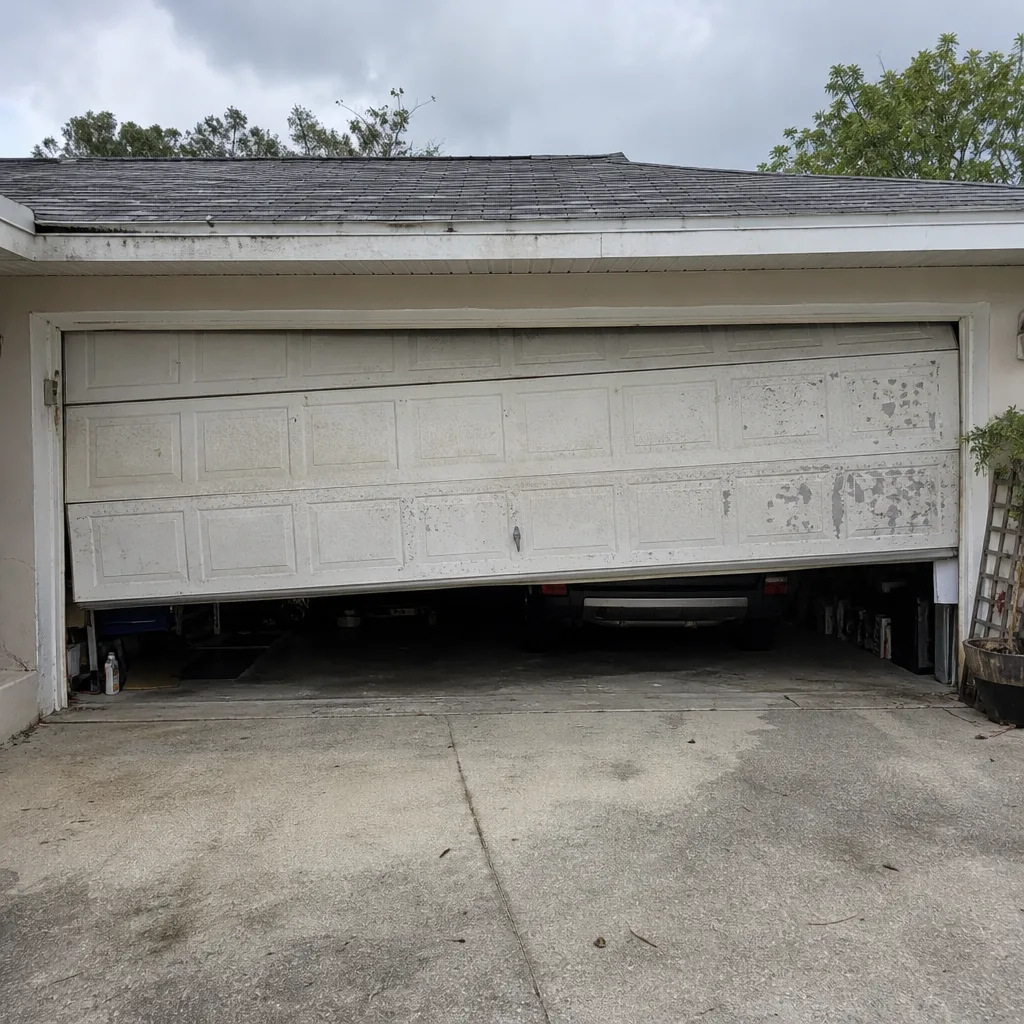 Before
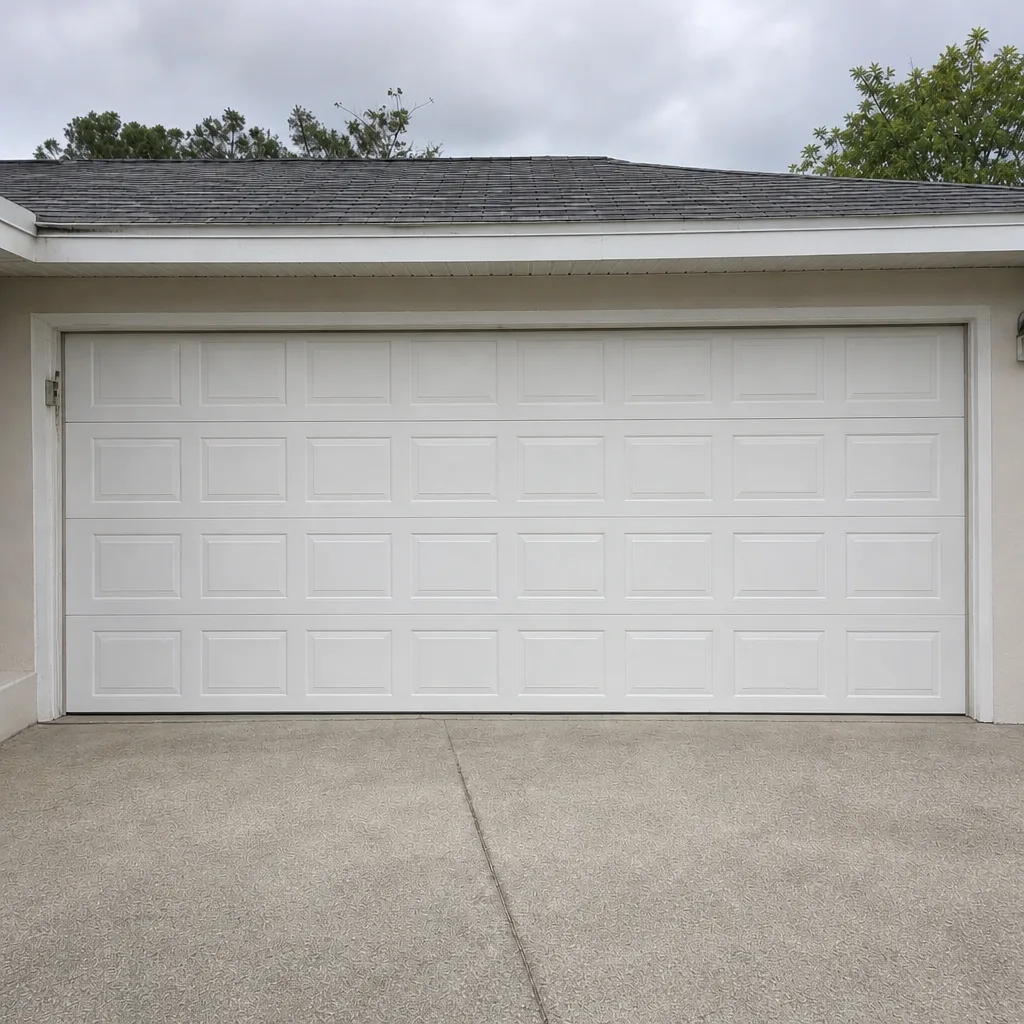 After
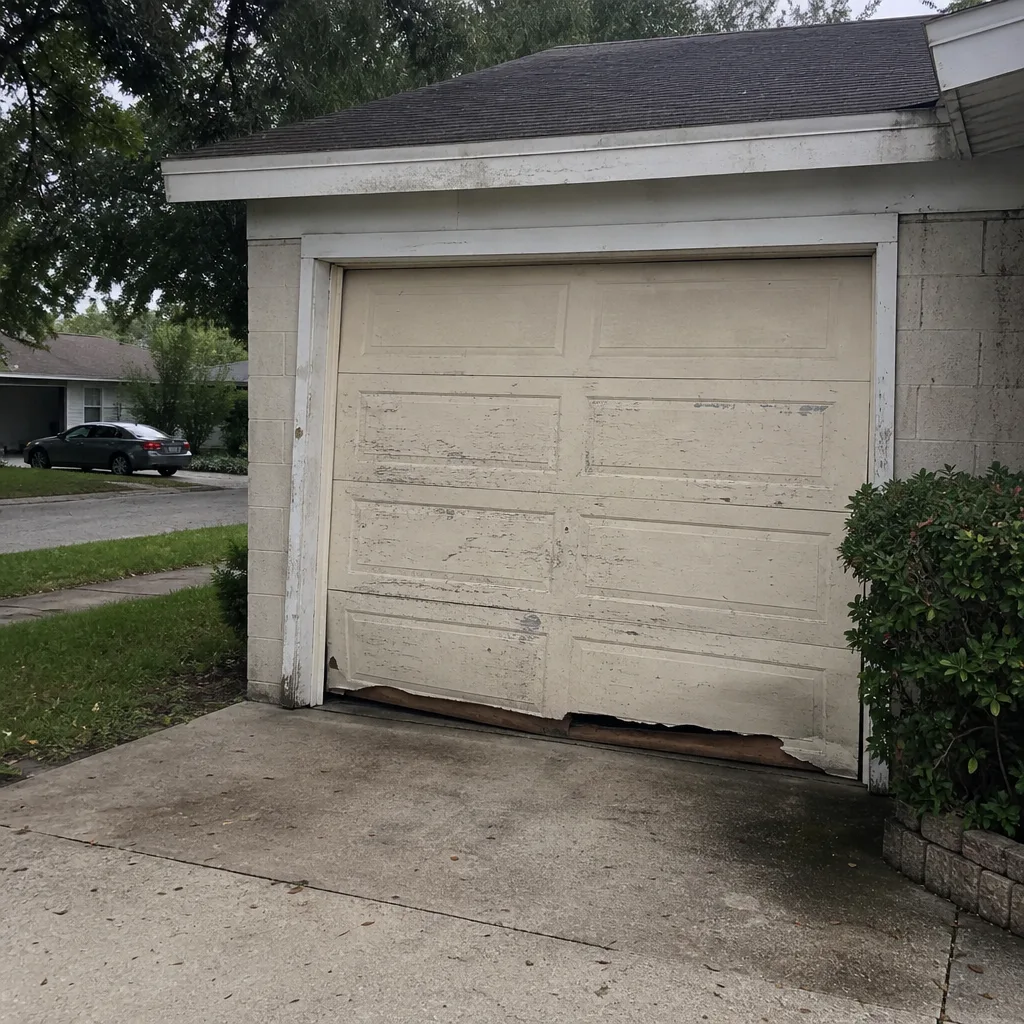 Before
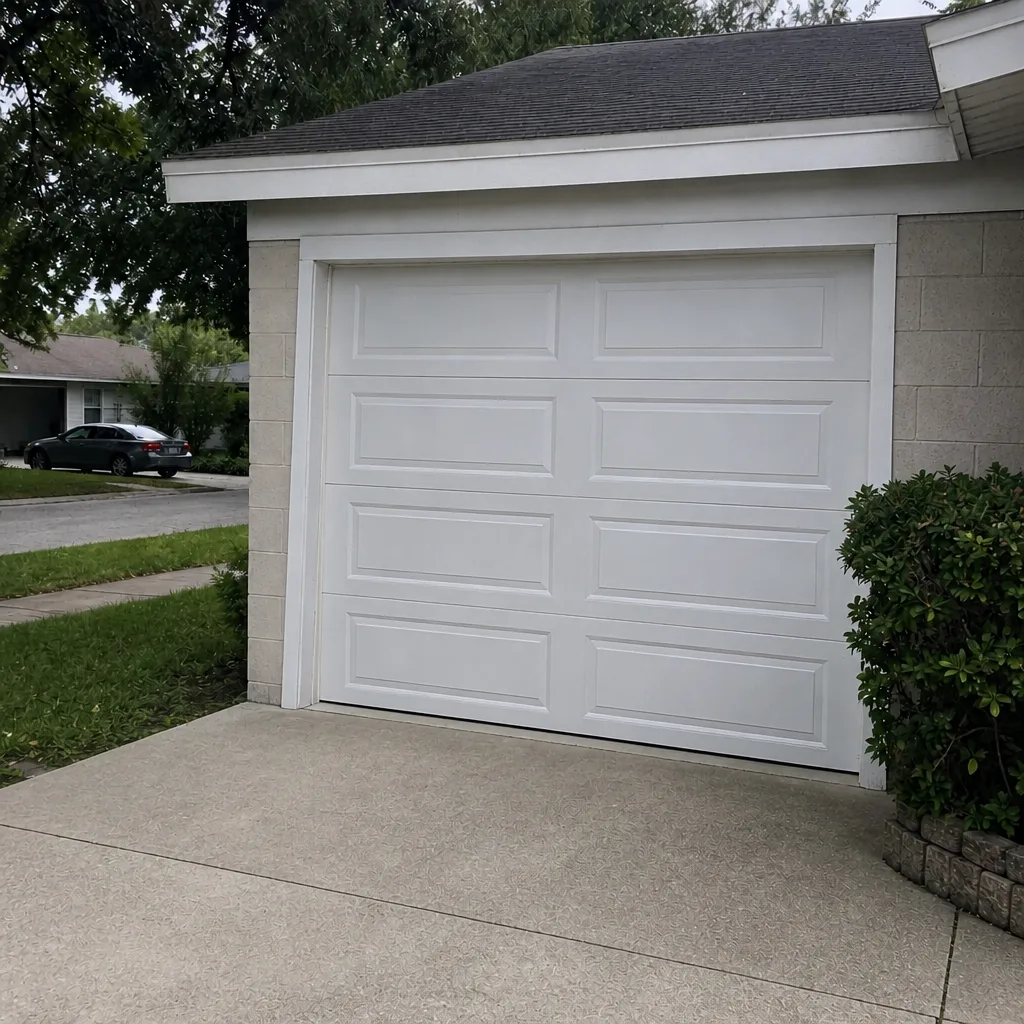 After
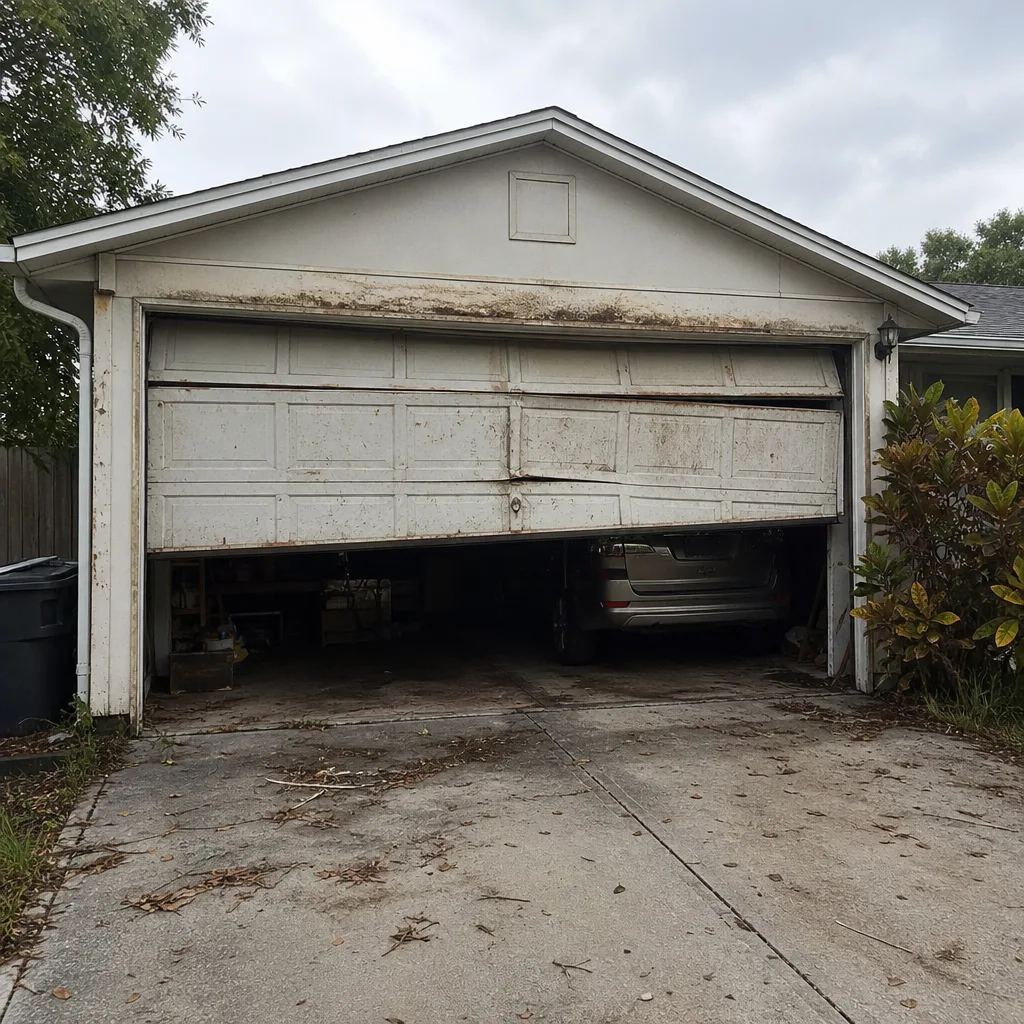 Before
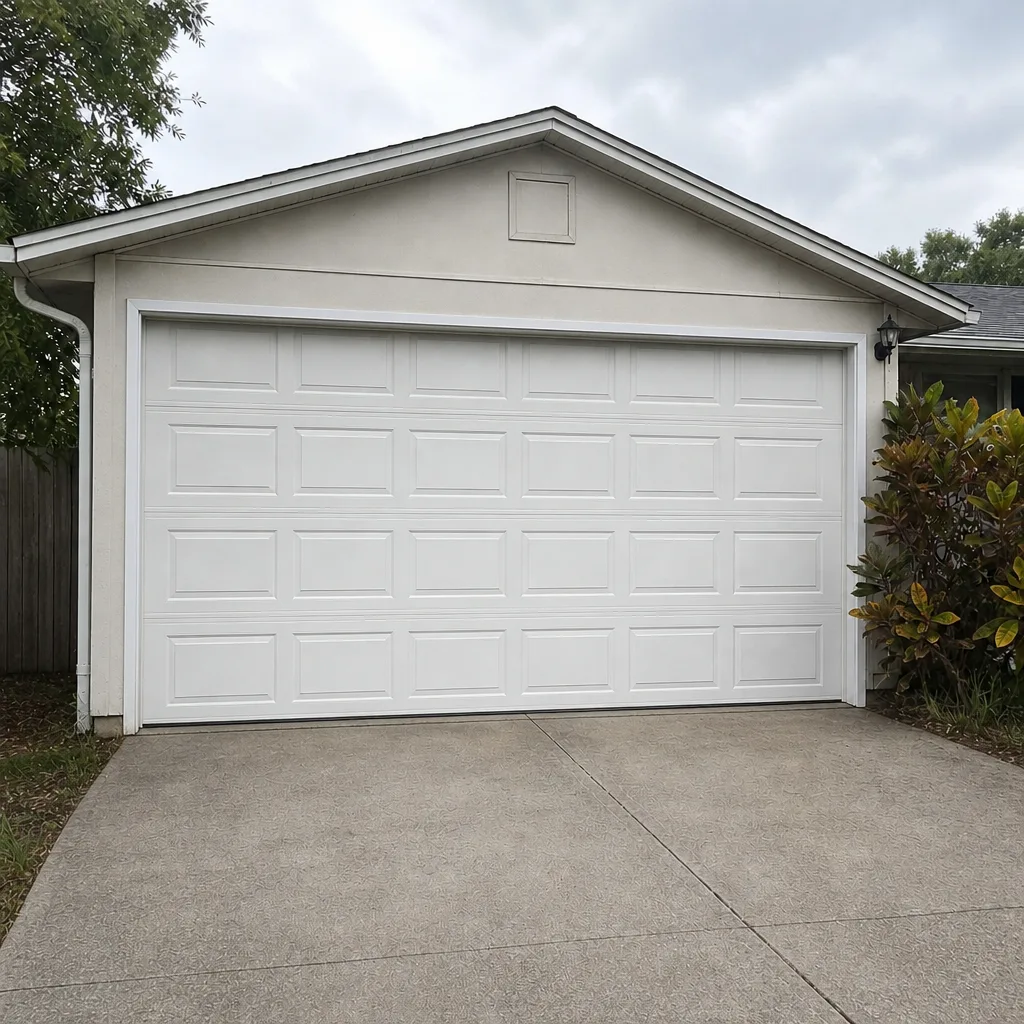 After
When to Call a Professional
Some situations obviously require a pro: a snapped torsion or extension spring, a door that won’t open or won’t close, an opener that runs but doesn’t lift, a door off its track, or a hard impact that bent a panel. All of those are call-now situations, and the question isn’t whether to call but who. When the door won’t move, we move fast – emergency service is a core offering for us, not something we upcharge for. Routine items also deserve a pro: noisy opener chains, opener remotes that won’t pair, sensor misalignment, a door that reverses mid-travel, or a growing rust problem at seams. And full replacements always deserve a written quote from a licensed contractor with brand-specific experience. Town ‘n’ Country Garage Door Repair Pros offers free estimates in Town ‘n’ Country – call (833) 987-0462 and we’ll walk you through it, no pressure either way.
Frequently Asked Questions
Ask for the license number in writing and look it up on the Florida DBPR website in about two minutes. Confirm the license is active, that the license type matches garage door work, and that the business address and qualifier on file are correct. If the contractor can’t or won’t provide a number to search, that’s your answer. Call (833) 987-0462 for a free estimate from a properly licensed pro.
Ask for three: general liability, workers’ compensation, and commercial auto. Each should be current and issued as a certificate of insurance. General liability covers property damage, workers’ comp covers crew injuries, and commercial auto covers vehicle-related damage on your property. If any of the three is missing or “coming later,” hold off. Call us at (833) 987-0462 for a free estimate.
Spring repair pricing depends on whether you have one spring or a matched pair, and the size of the spring assembly. A typical single-spring replacement runs in the low to mid two-hundreds; a matched pair usually runs close to double that. The written quote is the price – we confirm it in writing before work starts, so there’s no surprise on the final invoice. Call (833) 987-0462 for an exact quote; estimates are free.
For emergency situations – a door that won’t close, a snapped spring blocking the car in, or an opener that’s failed – we prioritize dispatch because getting the door working again matters immediately. Call (833) 987-0462 and we’ll tell you what we can do. For replacements and new installs, scheduling is different because doors are measured and ordered, so we plan those in advance with a free measure and a written price.
It shouldn’t. A reputable contractor quotes the job on a written scope with line items and confirms the price before starting. If additional work is needed once the door is opened up, that should be discussed and agreed before the technician continues, not discovered on the invoice. If you get a written quote, ask specifically whether it’s a firm price. Call (833) 987-0462 for a free estimate that’s confirmed before work.
Permit requirements vary by jurisdiction and by the scope of the job – a full door replacement may need one, a spring repair typically doesn’t. Rather than quote a rule that may not apply to your address, ask the contractor whether your specific project needs a permit and confirm with Hillsborough County or the City of Tampa building department. A pro will know who to call. Call (833) 987-0462 for a free estimate.
The Bottom Line
Hiring the right garage door contractor in Town ‘n’ Country comes down to a short list of habits: check the Florida DBPR license before anything else, request all three insurance certificates, insist on a written scope with line-item parts, treat cash-only deposits and pressure tactics as red flags, and compare quotes only when you know what’s actually being installed. The vetting takes maybe twenty minutes. We work on the brand you already have, and we’re trained on eight of the most common door and opener brands, so most Town ‘n’ Country homes are already covered. If you’d rather skip the comparison shopping and just want a quoted price from a properly licensed pro, call us at (833) 987-0462 for a free estimate. No guesswork, no runaround.
Written by the team at Town ‘n’ Country Garage Door Repair Pros.