Last updated November 23, 2026
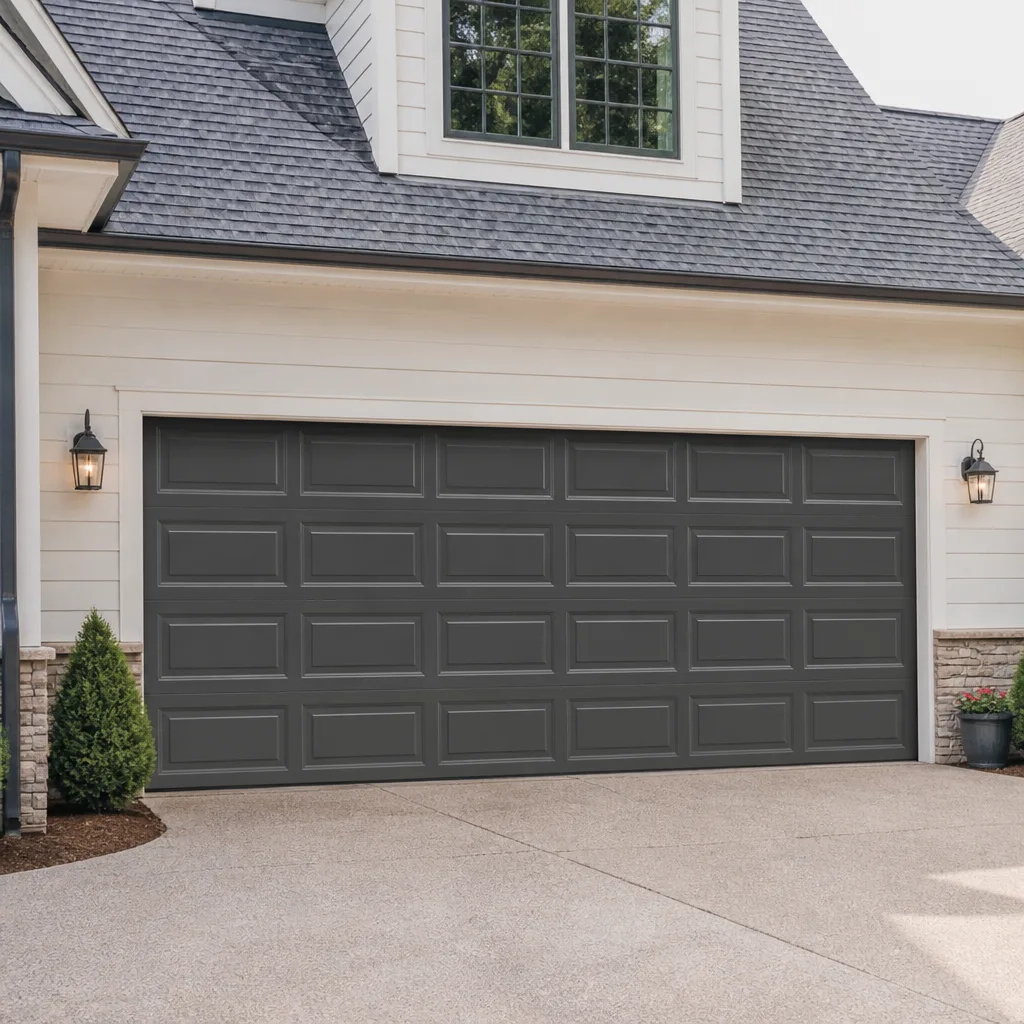 Raised-panel steel
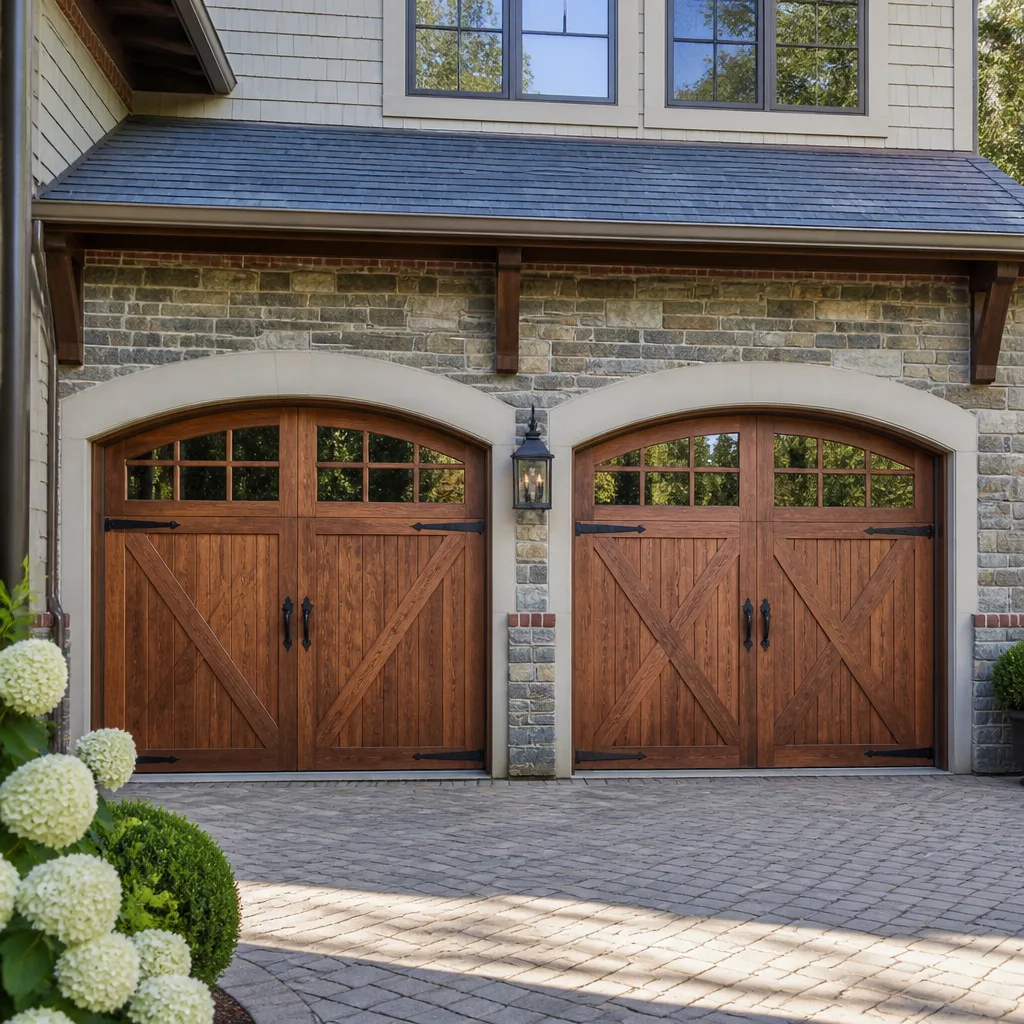 Carriage house
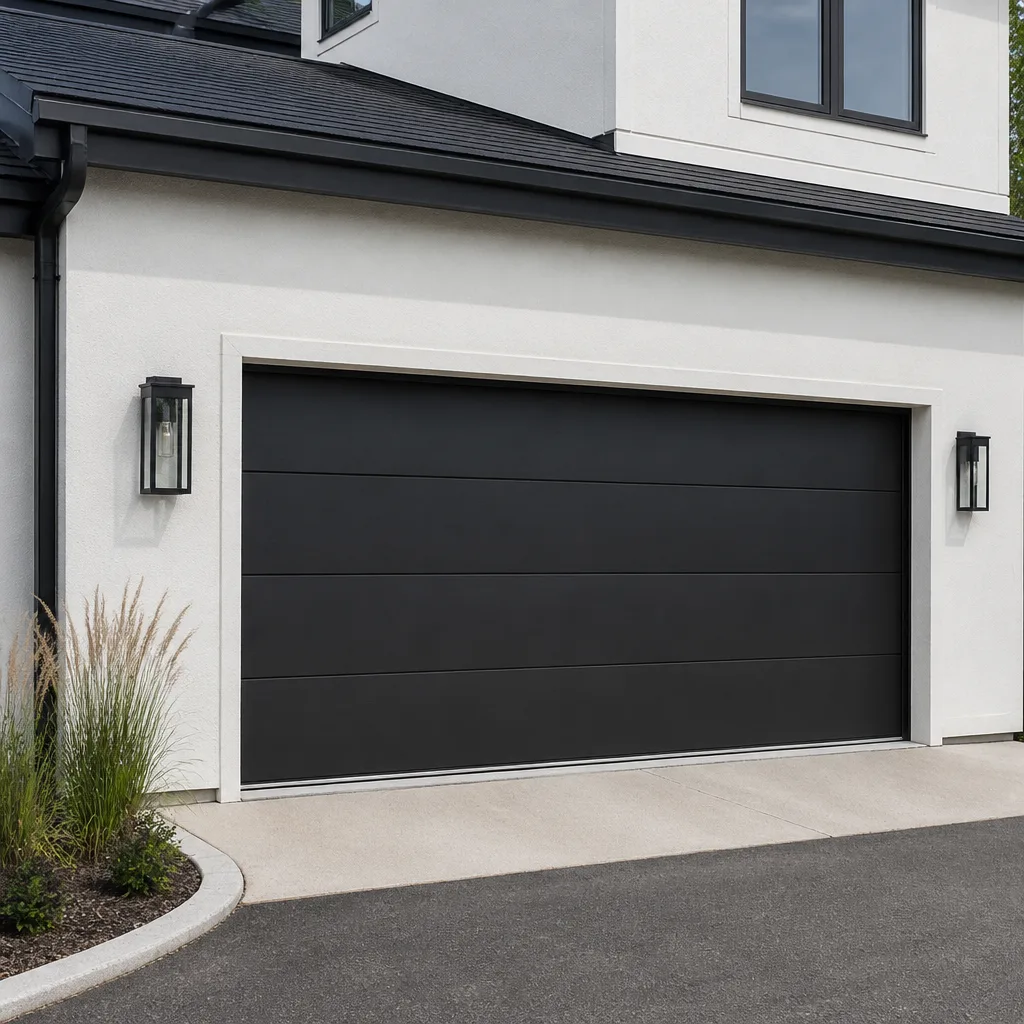 Modern flush
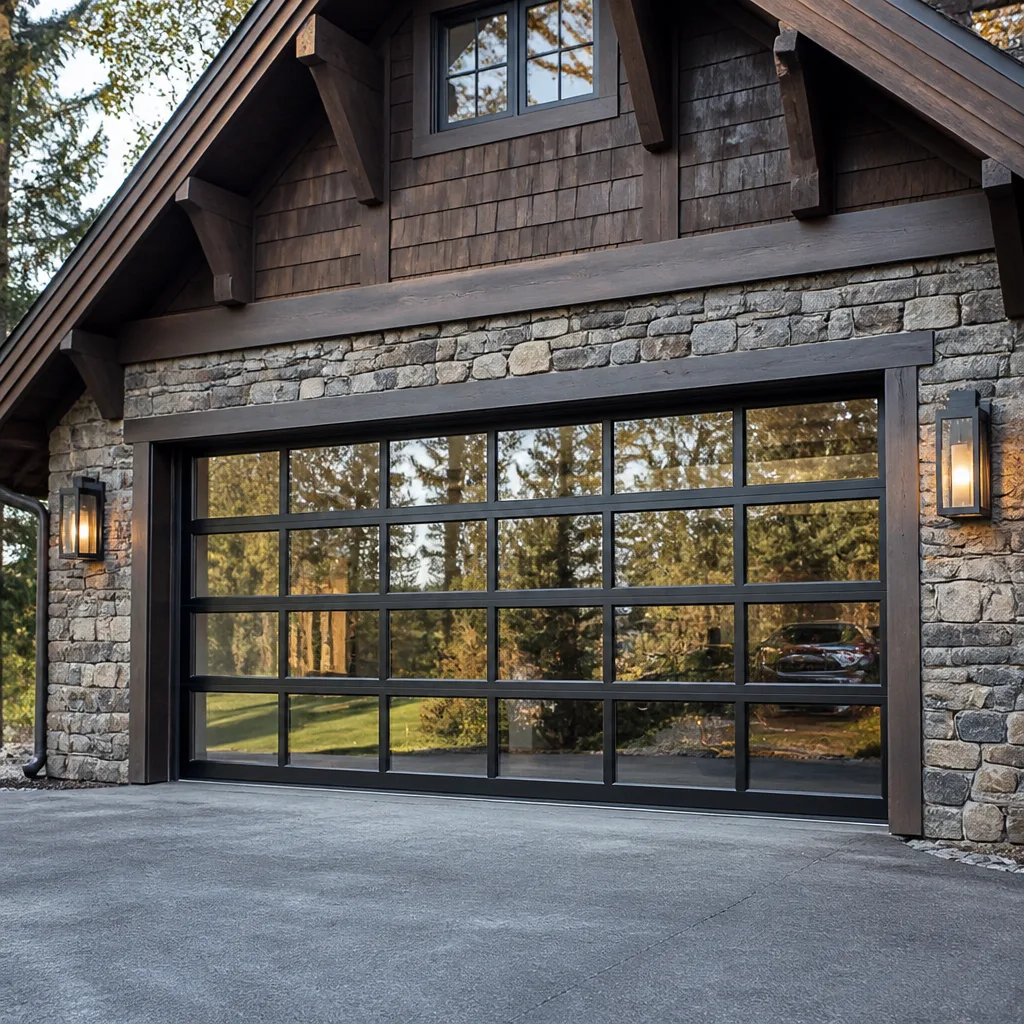 Full-view glass
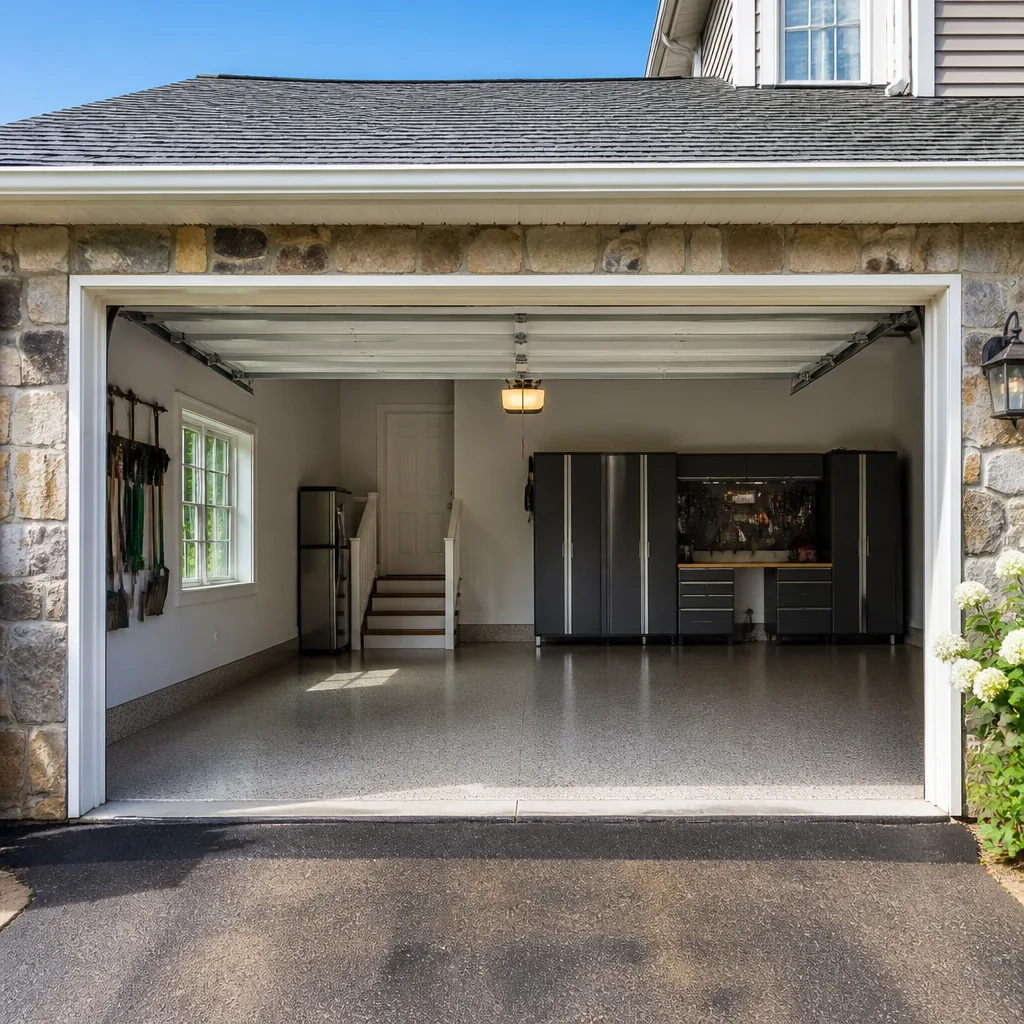 LiftMaster openers
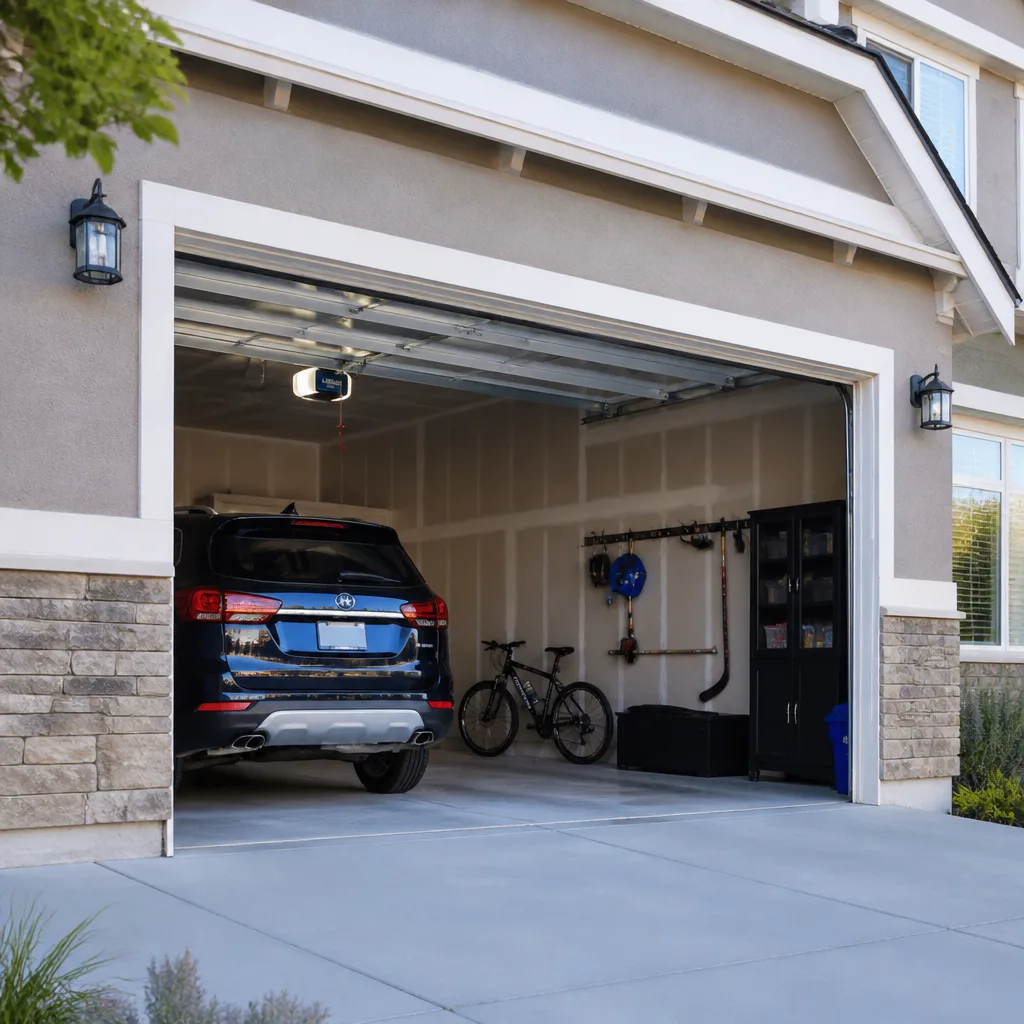 Chamberlain openers
Full 25-point door and opener safety check with every visit - springs, cables, rollers, tracks, and your LiftMaster or Chamberlain opener included
You get a price before we start. It does not change when the pro arrives.
Get your free estimateGarage Door Cost Breakdown: The Town ‘n’ Country Homeowner’s Reference for 2026
When a national home improvement site tells you a garage door spring replacement runs “$150 to $350,” that range is wide enough to hold both a legitimate local pro and somebody working out of an unmarked van with a phone number he changes every season. A number that broad doesn’t help you budget. It just moves the guesswork one step later. What you need is the local picture: what trades actually charge around Tampa Bay, which parts of a quote are real cost, and which parts are padding. This guide gives Town ‘n’ Country homeowners tighter ranges, line by line, plus the market variables most cost articles skip.
Quick Answer
In the Town ‘n’ Country market, most common garage door repairs land between roughly $95 and $450 depending on the part, a single torsion spring replacement typically runs $180 to $340, and a full door replacement realistically starts around $1,200 for an entry-level single door and climbs past $4,000 for a premium double with a belt-drive opener. A written estimate sets the final price, and a permit fee from Hillsborough County usually adds a separate line you should ask about up front.
Styles & brands we work with
- Raised-panel steel
- Carriage house
- Modern flush
- Full-view glass
- LiftMaster openers
- Chamberlain openers
Table of Contents
- What the Common Repairs Actually Cost
- What a Full Door Replacement Costs at Each Tier
- Hillsborough County Permits and How They Show Up on a Quote
- Where Legitimate Cost Variation Lives – and Where Padding Hides
- Opener Repair and Replacement Pricing
- Financing and Phased Repair: When It Saves and When It Costs
- How the Local Climate Affects What You Pay
- Common Mistakes to Avoid
What the Common Repairs Actually Cost
Garage door work breaks down into a small number of job types, and each has its own price band in this market. Labor in the Tampa Bay area runs close to national averages, so the differences you’ll see between quotes usually come from parts markup and service call fees rather than hourly rates. Here are the ranges we see most often for standard residential doors in Town ‘n’ Country.
| Repair | Typical range | Notes |
|---|---|---|
| Single torsion spring replacement | $180 – $340 | One spring. Matched pairs cost about double. |
| Cable replacement (per side) | $120 – $250 | Usually both sides together for safety. |
| Roller replacement (set) | $95 – $200 | Nylon lasts longer than steel in humid air. |
| Single panel replacement | $200 – $550 | Depends on door model and color match. |
| Weatherstripping (bottom seal) | $85 – $175 | Includes removal of the old seal. |
| Opener repair (board, gear, belt) | $150 – $350 | Replacement sometimes costs less. |
| Full opener replacement | $350 – $850 | Includes install; belt-drive sits at the top. |
These are estimates, not a menu. When we quote a repair, the number you agree to before any work starts is the number you pay. Nothing gets added after the fact. If a technician finds a second problem mid-job, you hear about it first, you approve or decline, and then work continues or stops.
One note on springs: they’re the single most dangerous part on a garage door, and they’re also the repair most often shopped purely on price. A matched pair carries the door’s full weight, so replacing one spring of an aging pair usually just shortens the life of the other. We carry that conversation through before touching anything, because the right answer for the door isn’t always the cheapest line on the estimate.
What a Full Door Replacement Costs at Each Tier
A full replacement is a different purchase from a repair, and pricing reflects materials, sizing, and how much of the old hardware gets reused. In Town ‘n’ Country you’ll see three broad tiers for a standard single-car door, and roughly double those figures for a double-car door of the same build quality.
- Entry tier, $1,200 – $1,800: steel raised-panel doors, often Clopay or Wayne Dalton, single-layer construction with basic hardware. This is the workhorse door most homes in the area already have.
- Mid tier, $1,800 – $2,800: insulated steel with a stiffer back, better seals, and quieter operation. Amarr sits in this band for a lot of residential installs.
- Premium tier, $2,800 – $4,200+: two-layer or three-layer insulated doors, carriage-house styles, upgraded tracks, and a belt-drive opener bundled in. Custom sizing can push past this.
Wind-rated doors are the local wrinkle. Tampa Bay sits in a wind zone that Hillsborough County takes seriously, so a replacement door often needs a wind-load rating tied to your home’s design. That requirement adds cost at every tier, but it’s a real building requirement, not a sales line. Ask your contractor for the door’s rating documentation and confirm the specifics with the county’s building department before signing anything.
Full garage door installation involves measuring, ordering, and scheduling, so it’s a planned job rather than an emergency call. The advantage of ordering through a specialist is that the same company measuring the opening also handles the opener and the finishing hardware, so nobody points fingers if the fit is off.
Hillsborough County Permits and How They Show Up on a Quote
Door replacement in Hillsborough County generally requires a permit, and the fee is typically a separate line item on the estimate. The amount depends on the scope of the job and the county’s current fee schedule, so the right move is to ask your contractor to show the permit as its own line, not fold it into the total. If a quote lumps everything under one number with no breakdown, ask for the permit spelled out. The county’s building department can confirm the fee for your specific address before you commit.
Permits matter for more than paperwork. An inspection confirms the door was installed to the wind-load rating the county requires, which is the part that protects you if you ever sell the home or file a claim. A contractor who suggests skipping the permit to save money is telling you something about how they operate.
Here is how a clean quote comparison usually goes:
- Line 1: door model and size, with the wind-load rating stated.
- Line 2: hardware – tracks, springs, rollers, hinges.
- Line 3: opener, if included, with brand and model.
- Line 4: labor and disposal of the old door.
- Line 5: permit fee, itemized separately.
If a quote is missing lines 1 and 5, ask why. Those are the two spots where a comparison between contractors gets muddy.
Where Legitimate Cost Variation Lives – and Where Padding Hides
Not every difference between two quotes is a red flag. Some variation is real, and understanding which is which keeps you from overpaying on one hand or walking away from a fair price on the other.
Legitimate variation comes from a few places. Labor rates shift a little across the bay, but not much. OEM parts versus aftermarket parts can swing a spring or opener job by $40 to $100, and OEM parts usually hold up better in humid air. Door model differences drive the biggest legitimate gap on replacement, especially when wind rating and insulation change. Brand fluency is another real factor: a company trained on Genie and LiftMaster openers has the right diagnostic tools and knows the failure patterns, which cuts time on the job.
Padding, by contrast, tends to cluster in predictable places:
- Service call fees: a reasonable trip charge covers the visit, but a fee stacked on top of an hourly rate for the same trip is double-dipping.
- “Diagnostic” charges: a diagnostic is legitimate for an intermittent opener fault that takes real time to trace. It shouldn’t be a flat add-on for a visibly broken spring.
- “Emergency” surcharges: emergency response sometimes costs more because of the hour, and that’s fair, but the surcharge should be quoted clearly before anyone drives out.
- Hardware bundles: roller sets and hinge kits are cheap parts. A bundled price that’s far above the line-item cost deserves a question.
Our rule is simple: you get the number before the work starts, and the number doesn’t grow after. That applies to garage door repair jobs of every size and to emergency calls, where the last thing you need is an invoice surprise at 10 p.m.
Opener Repair and Replacement Pricing
Openers fail in a few characteristic ways: a stripped gear, a bad logic board, a snapped belt or chain, or a wall control that stops talking to the motor. Repair runs $150 to $350 for most residential units, and replacement lands between $350 and $850 depending on drive type. Belt-drive is the quietest and sits at the top of that band; chain-drive is the workhorse and sits lower; screw-drive falls in between.
When repair stops making sense:
- If the unit is a common brand and the board is available, repair usually wins on cost.
- If the gear is stripped and the motor is nearing the end of its life, replacement saves you a second call.
- If the wall control, remotes, and safety sensors all fail together, the board is the likely culprit and worth pricing both ways.
Smart features change the math a little. If you’re already replacing, a Wi-Fi-capable unit with battery backup adds cost but also adds function most homes use daily. garage door opener repair is worth exploring before replacement, especially on Genie and LiftMaster units, where parts are widely available and the fix is often straightforward.
One thing we see in Town ‘n’ Country homes more than in cities: longer driveways and detached garages mean more remote range needed, and older openers sometimes lose range because of antenna placement rather than a failing motor. That’s a cheap fix if the technician checks it first, which is why a proper diagnostic beats a fast part swap.
Financing and Phased Repair: When It Saves and When It Costs
A full replacement costs more upfront than a repair, which is why homeowners sometimes phase the work: fix the spring now, wait on the panels, replace the opener next year. That strategy works in one situation and quietly costs you money in another.
Phasing makes sense when the door is structurally sound and the repairs are independent. A bottom seal, a roller set, and a weatherstripped frame can be done across months without any of them making the others worse. If a garage door repair quote covers a cable and a spring on the same door, do them together. Cables and springs share the load, and replacing one without the other usually just shifts the failure to the older part.
Phasing costs you when the door is already at the end of its life. Spending $400 to $600 on springs, rollers, and a cable on a door that needs $2,500 of replacement work within a year or two means paying twice for the same problem. In that case, financing the full job often costs less over the same window than a series of repairs.
On financing specifically, the math is straightforward: compare the total interest paid against what you’d spend on interim repairs, and factor in the risk of a failed door leaving your car trapped or your house open. If the total financed cost is less than the phased repair path, replacing now is the better deal. If not, phase it. Ask for both numbers in writing and decide from there.
How the Local Climate Affects What You Pay
Town ‘n’ Country’s mild winters and hot, humid summers don’t crack steel the way hard freezes do up north, but the humidity does its own damage. Steel doors sweat on the inside of the panel, painted surfaces check and peel over time, and wood-look doors take on moisture at the joints if the finish isn’t maintained. That pushes replacement decisions faster than you might expect and makes panel replacement more common here than full door replacement on older homes.
Heat also matters for openers. Motors run hotter in an unventilated garage, and logic boards in older units fail more often during the hottest weeks. That’s one reason we field more opener calls in late summer than at any other point in the year. It’s a seasonal pattern, not a reason to preemptively replace a working unit.
For the homeowner, the practical effect is that weatherstripping matters more than most cost guides admit. A failed bottom seal lets in humid air, which is what ages the door from the inside. That’s a $85 to $175 job that postpones far more expensive work. Our technicians have up to 14 years of experience working in this climate, and the recurring issues in Town ‘n’ Country garages are consistent enough that we check the seal first on most service calls.
Common Mistakes to Avoid
- Accepting a wide national range as your budget. A “$150 to $350” spring range is too broad to plan around. Ask for a local line-item quote before you commit.
- Comparing totals without comparing line items. A cheaper total can hide a missing permit or an aftermarket spring. Line-item comparison is the only fair way to judge two quotes.
- Skipping the wind-load rating conversation. Hillsborough County wind requirements affect door selection and cost. Ask the county’s building department and your contractor to confirm before ordering.
- Treating a diagnostic fee as automatic. A visible broken spring doesn’t need a diagnostic hour. Ask what the fee covers before agreeing to it.
- Replacing one spring in a matched pair. It usually shortens the life of the older spring and can lead to a second failure within a season.
- Phasing repairs on a failing door. If the door is near the end of its life, a series of repairs can cost more than replacement within two years.
- Hiring on price alone for emergency work. A door stuck open at night is a security question. Pick the company that quotes the emergency visit price up front, not the one that surprises you after.
See the difference
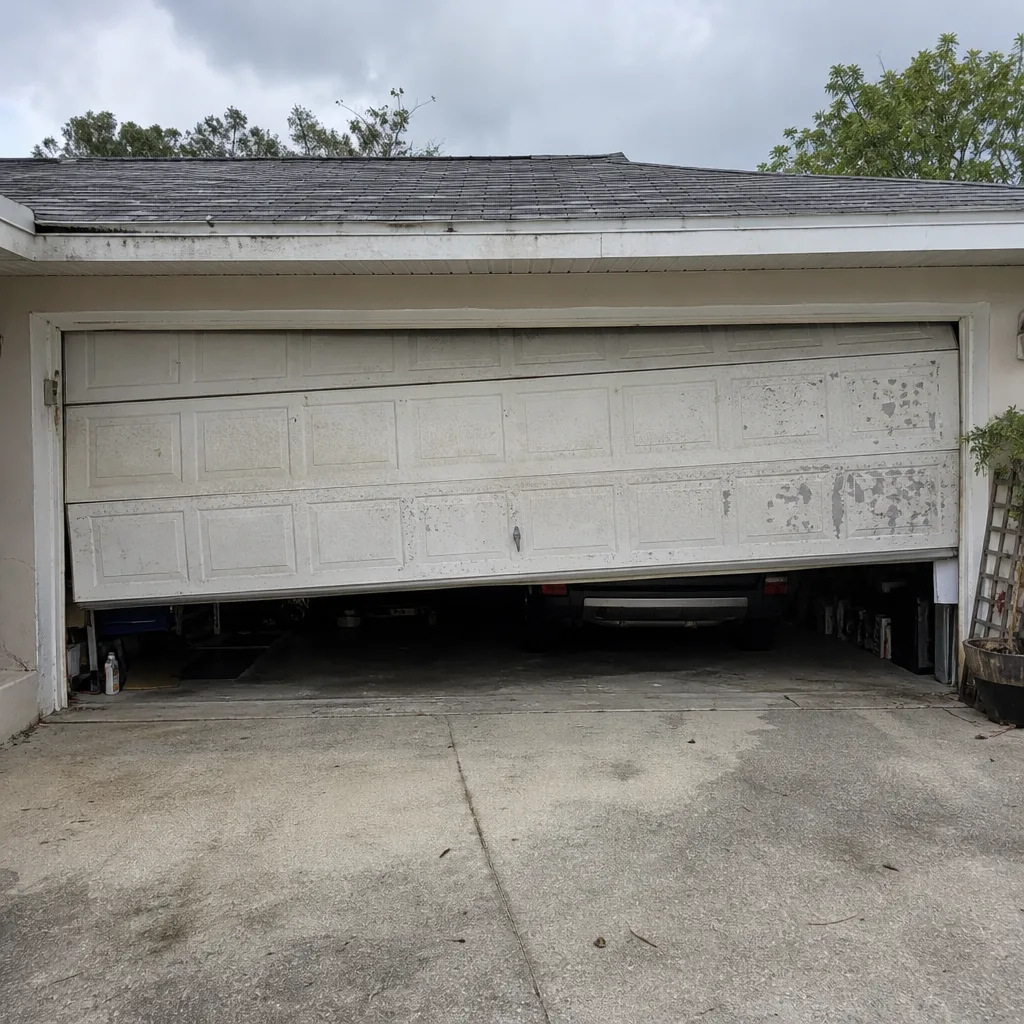 Before
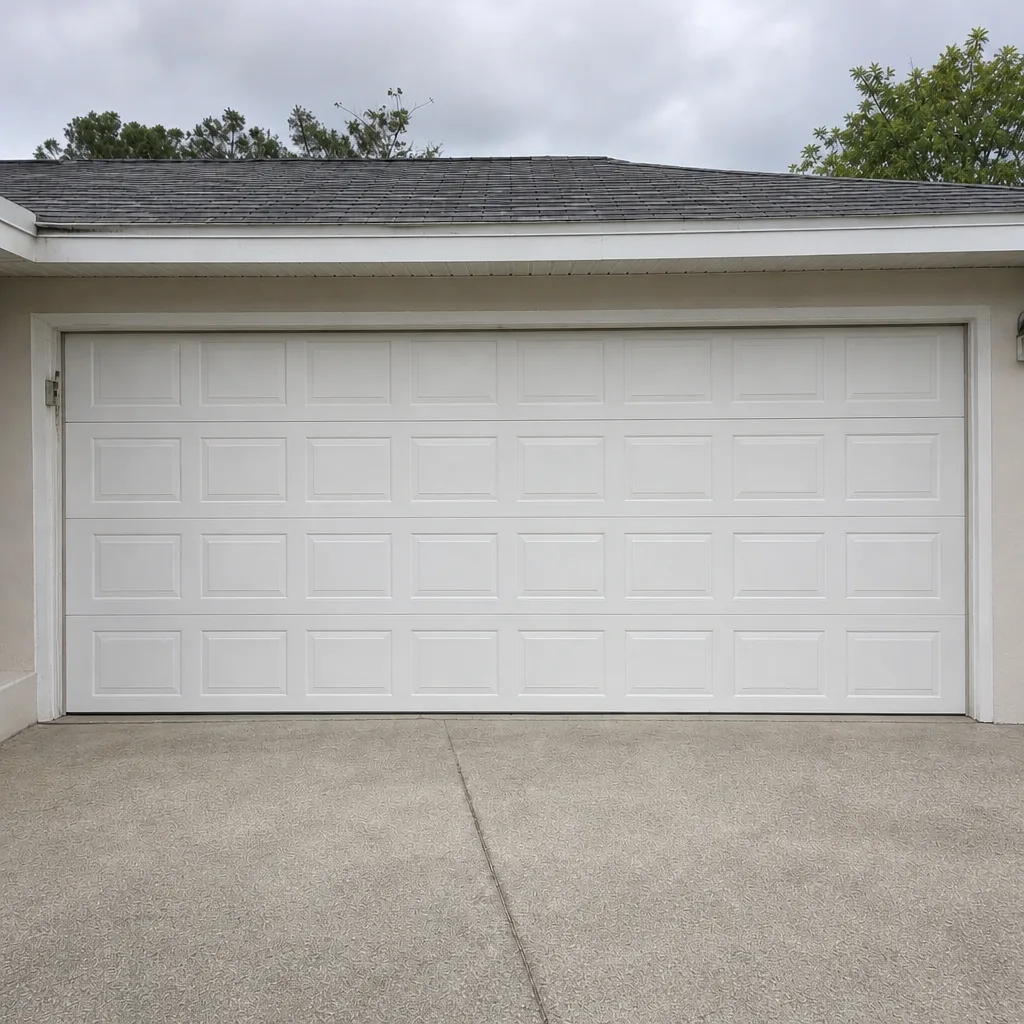 After
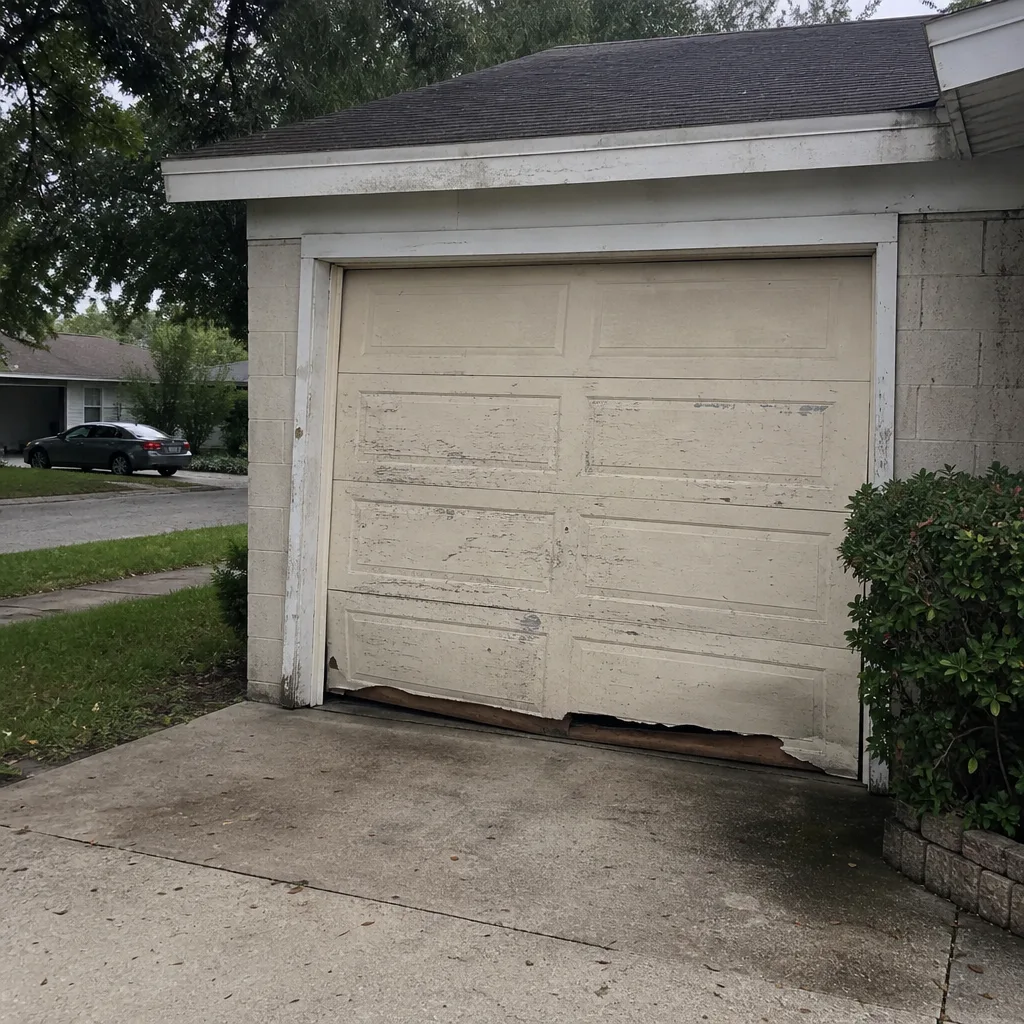 Before
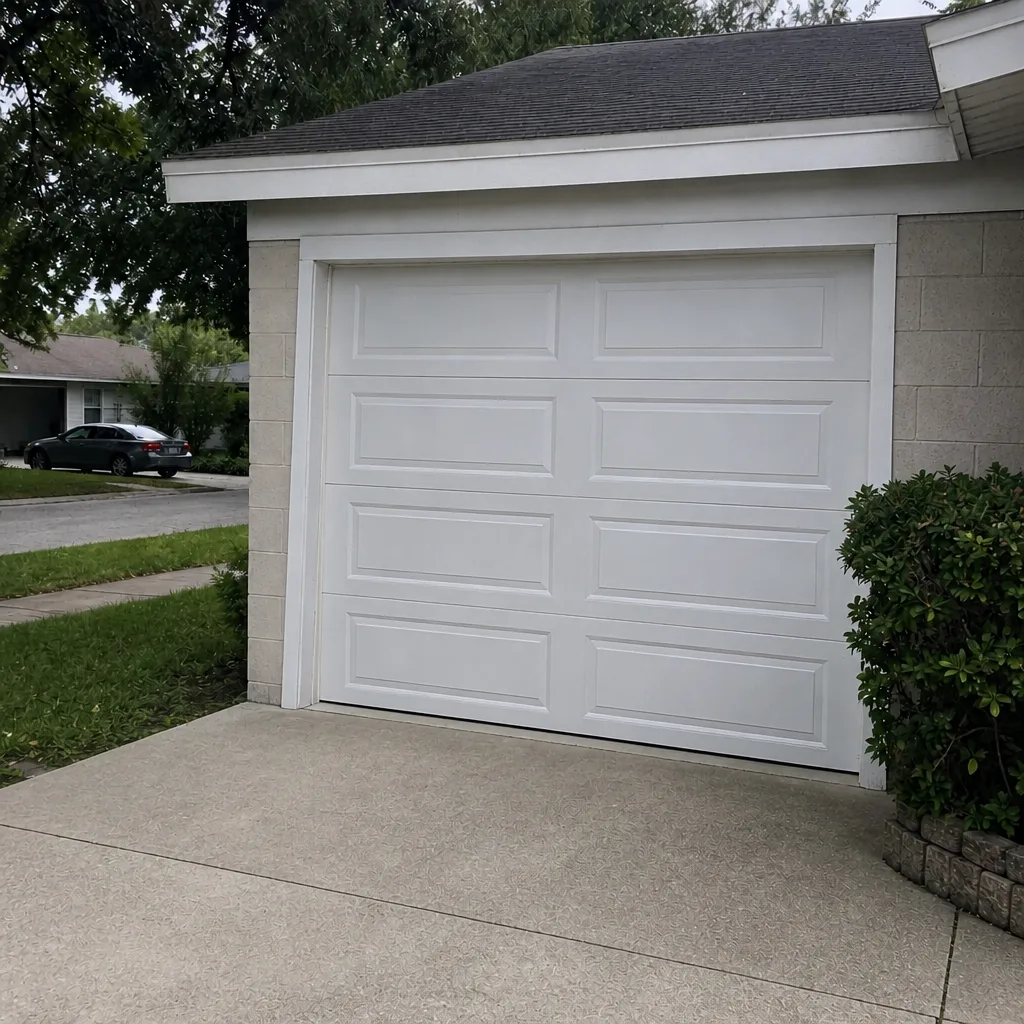 After
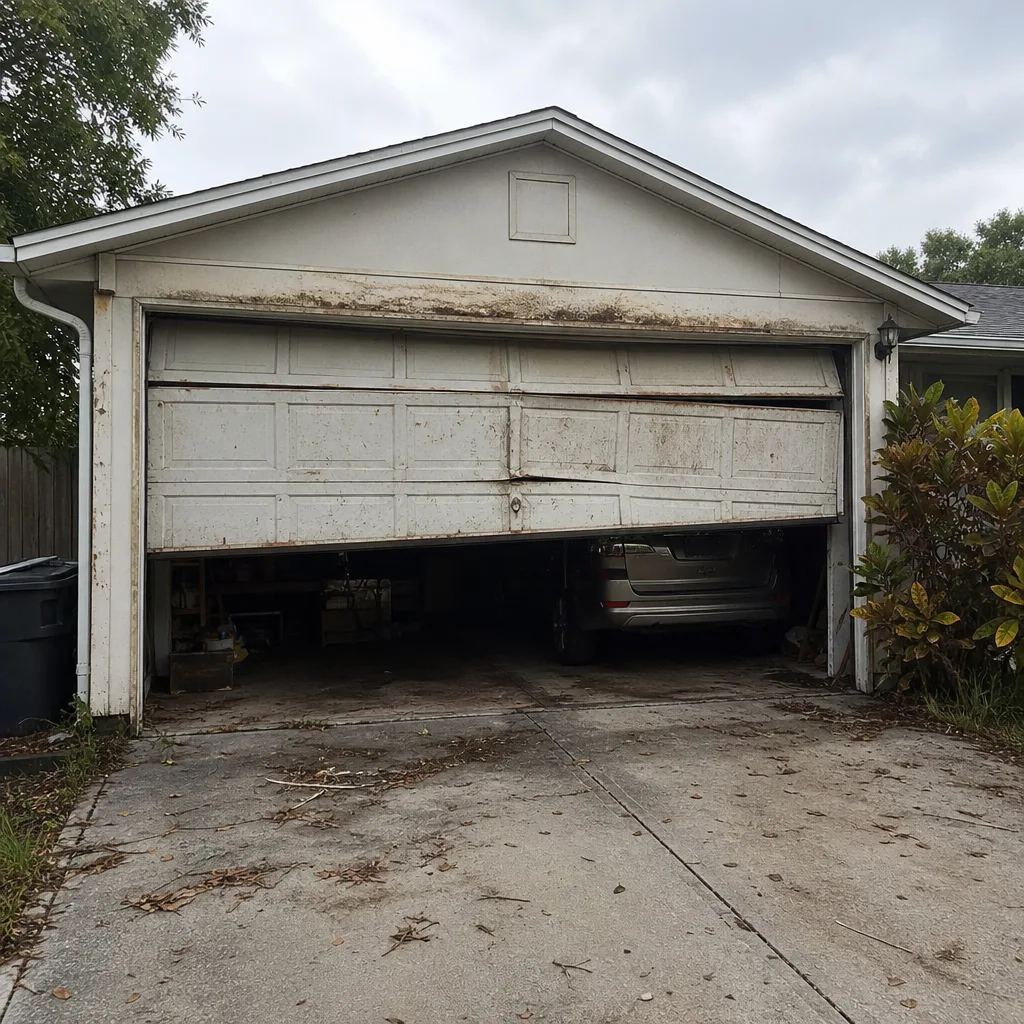 Before
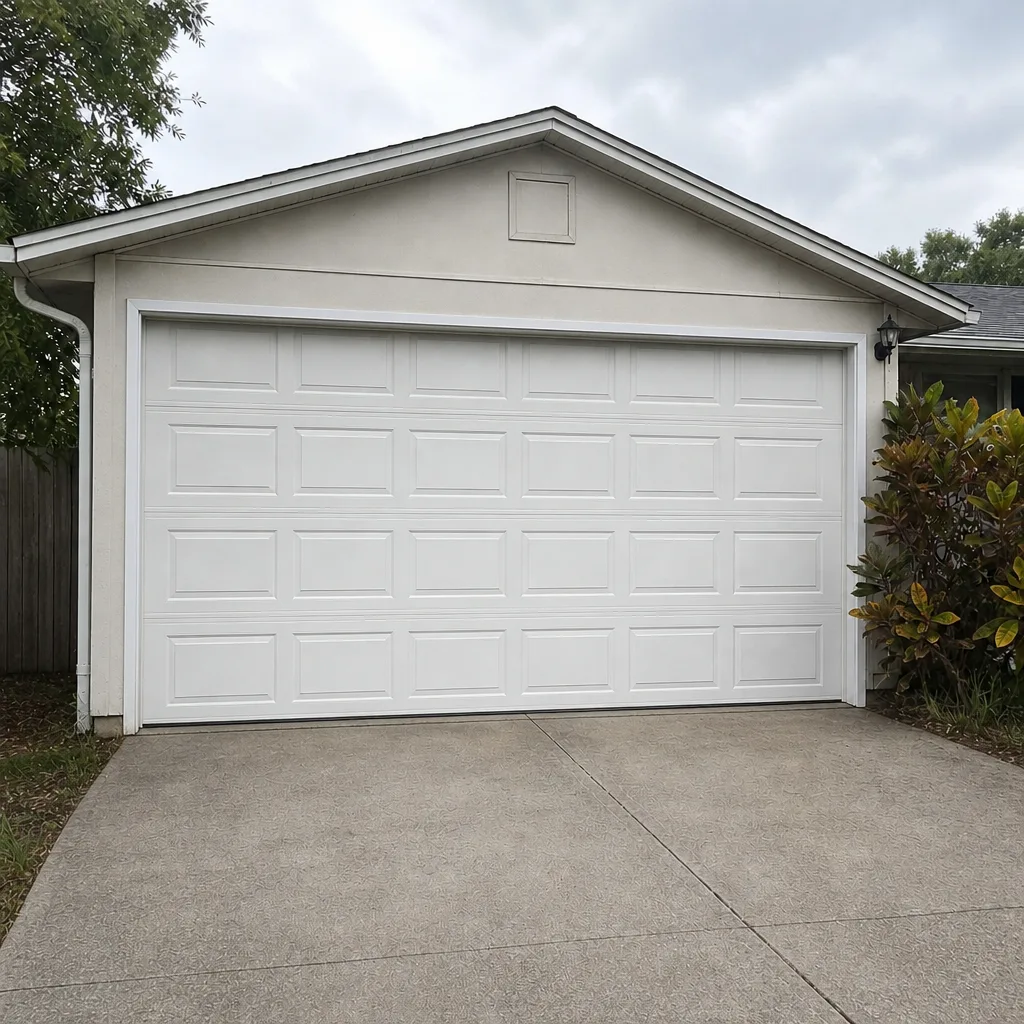 After
When to Call a Professional
Call a trained professional when a spring snaps, a cable goes slack, a door comes off its track, or the opener stops responding to every control at once. Springs and cables are under real tension and can cause serious injury if handled wrong, so those are not a homeowner job. A door that’s stuck open, damaged in a storm, or running rough enough to shake the frame warrants the same call.
If you’re planning a replacement rather than a repair, the right first step is a measured quote, not a rushed call. And if you own a Genie, LiftMaster, Chamberlain, Clopay, Amarr, Wayne Dalton, Craftsman, or Raynor door or opener, we work on the brand you already have.
Town ‘n’ Country Garage Door Repair Pros offers free estimates in Town ‘n’ Country – call (833) 987-0462. We quote the price and agree it with you before any work starts, so the number in the estimate is the number on the invoice.
Frequently Asked Questions
Replacing one torsion spring in Town ‘n’ Country typically runs $180 to $340, and a matched pair costs about double that because both springs are usually replaced together. Call (833) 987-0462 for an exact quote on your door – estimates are free.
Emergency garage door service is a core part of what we do, not an upsell, and we can often get to a stuck door quickly. Call (833) 987-0462 and we’ll confirm timing and quote the visit before anyone heads out.
No. We quote the price and agree it with you before any work starts, and that agreed number is what you pay. If we find a second issue on the door, we’ll tell you, quote it, and wait for your go-ahead – we won’t just add it.
The local professional we connect you with is licensed and insured as Florida requires for this work. Our technicians have up to 14 years of experience on the brands most Town ‘n’ Country homes already have.
In most cases, yes – Hillsborough County generally requires a permit for door replacement, and the wind-load rating is part of what gets checked. Ask the county’s building department to confirm the fee and requirements for your address, and ask your contractor to list the permit as its own line on the quote.
Repair is cheaper when the unit is a common brand and the failed part is available, usually $150 to $350 versus $350 to $850 for replacement. If the gear is stripped and the motor is near the end of its life, replacement is usually the better value over the next few years. Call (833) 987-0462 and we’ll price both.
The Bottom Line
Garage door pricing in the Town ‘n’ Country market is tighter than the national ranges suggest. Springs run $180 to $340 each, most common repairs land between $95 and $450, and a full replacement realistically starts around $1,200 and climbs past $4,000 for a premium double. The variables that matter most are line-item transparency, the Hillsborough County permit and wind-load requirement, and whether a repair or a replacement is the better long-term spend. Ask for the breakdown, compare line by line, and confirm the permit is on the quote. Then call to get a real number for your door.
Ready for a written estimate on your door? Call Town ‘n’ Country Garage Door Repair Pros at (833) 987-0462 for a free estimate. We handle springs, openers, panels, and full installs – one call covers it, wherever in Town ‘n’ Country you live.
Written by the team at Town ‘n’ Country Garage Door Repair Pros.